


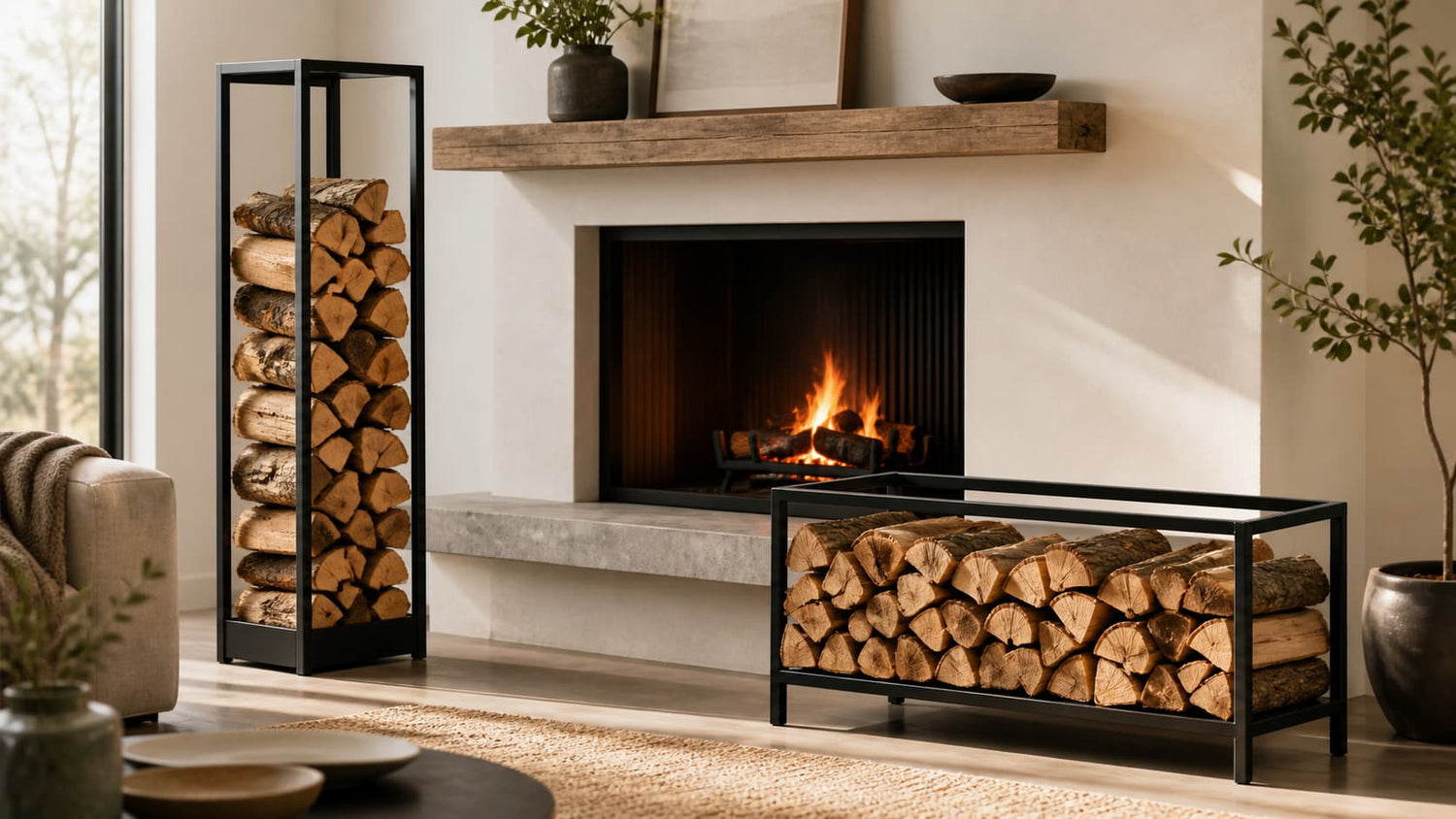
Choosing between a vertical and horizontal firewood rack sounds simple until you stand in front of the fireplace and try to imagine the rack in real life. One shape rises upward like a narrow column. The other stretches along the floor or hearth like a low storage bench. Both can hold logs neatly. Both can make the fireplace area feel more organized. But they solve different problems.
A vertical firewood rack is usually best when floor space is limited, the fireplace corner is narrow, or the room needs a clean upright accent. It stacks logs upward instead of spreading them across the wall. A horizontal firewood rack is usually best when you have a wider hearth, want easier access to a larger amount of wood, or want the log stack to feel grounded and visually calm.
The better choice is not only about capacity. It depends on the room shape, ceiling height, walking paths, fireplace width, log size, how often you use the fireplace, and how visible the rack will be in the room. A rack that looks perfect in a cabin may feel too heavy in an apartment. A slim vertical rack that saves space in a small living room may not hold enough wood for someone who burns logs every evening in winter.
This guide compares vertical vs horizontal firewood racks from a practical, design, and storage point of view. It is written for homeowners, renters, cabin owners, guest house hosts, and anyone trying to keep firewood near the fireplace without turning the room into a storage zone.
Quick Answer: Vertical vs Horizontal Firewood Rack
Choose a vertical firewood rack if you have a small room, narrow fireplace corner, limited wall space, or want a tall, compact log holder that creates less visual width. Choose a horizontal firewood rack if you have a wide hearth, burn wood often, want easier log access, or prefer a low, grounded look along the fireplace wall.
The simplest rule is this:
- Use vertical when you need to save floor width.
- Use horizontal when you need easier reach and wider capacity.
- Use wall-mounted when floor space is extremely limited.
- Use decorative or minimalist styles when the rack is highly visible.
For most indoor fireplace areas, both shapes can work. The difference is how each one changes the room. A vertical rack adds height and structure. A horizontal rack adds width and visual stability.
Vertical vs Horizontal Firewood Rack Comparison Table
| Feature | Vertical Firewood Rack | Horizontal Firewood Rack |
|---|---|---|
| Best for | Small rooms, corners, narrow hearth areas, apartments, compact fireplaces | Wide hearths, larger fireplace walls, frequent wood burning, family rooms, cabins |
| Space use | Uses height instead of width | Uses width instead of height |
| Visual effect | Tall, architectural, slim, space-saving | Low, grounded, balanced, classic |
| Log access | Logs may need more careful stacking and removal from the top or front | Logs are often easier to see, reach, and rotate |
| Capacity | Can hold a surprising amount if tall, but footprint stays narrow | Often better for larger everyday wood volume |
| Stability considerations | Needs even loading and a flat surface; heavier logs should stay low | Naturally low center of gravity when loaded evenly |
| Styling | Works well beside mantels, in corners, near tall walls, with modern decor | Works well under wide hearths, along walls, below windows, in rustic or traditional rooms |
| Small-space score | Excellent | Moderate, unless the rack is short and narrow |
| Best internal link | Vertical Firewood Racks | Horizontal Firewood Racks |
What Is a Vertical Firewood Rack?

A vertical firewood rack is a log holder that stores firewood upward. Instead of spreading logs across a long base, it organizes them in a tall, narrow frame. The shape may be rectangular, square, tower-like, open-frame, or decorative. Some vertical racks are slim enough to sit beside a fireplace without taking over the hearth wall.
The main benefit is footprint. A vertical rack can hold wood in a small amount of floor space because it uses height. That makes it useful in apartments, townhomes, small living rooms, compact cabins, and rooms where the fireplace is close to a doorway or seating area. If you have only a narrow corner beside the fireplace, a vertical rack often feels more natural than a long horizontal rack.
Vertical racks also create a strong design line. Firewood has texture and rhythm, and stacking it upward can make the rack feel almost architectural. In a modern room, a black metal vertical rack can echo window frames, fireplace tools, furniture legs, or wall art. In a rustic room, the same shape can add order to a wall that already has wood, stone, or brick.
The tradeoff is access and loading. Because logs are stacked upward, the rack should be loaded carefully. Heavier pieces belong at the bottom. Similar log lengths help the stack stay even. If the rack is very tall, it should not be overloaded at the top. A vertical rack works best when it is treated as organized daily storage rather than a loose pile.
If your priority is saving floor space, start with vertical firewood racks or the broader indoor firewood rack collection.
What Is a Horizontal Firewood Rack?

A horizontal firewood rack is a log holder that stores wood along a wider base. It usually sits low and stretches across part of a wall, hearth, patio, garage wall, or fireplace zone. Some horizontal racks are simple rectangular frames. Others have shelves, curved sides, tabletop surfaces, or decorative shapes.
The main benefit is accessibility. Logs are spread across a wider area, so it is easier to see what you have, grab a piece, rotate older logs forward, and keep the stack stable. If you burn wood often, a horizontal rack can feel more convenient because it behaves more like a small wood station than a narrow accent piece.
Horizontal racks also have a calm visual effect. They create a low line that can balance a wide fireplace, long mantel, or large stone surround. In a family room, cabin, lodge, or larger living room, a horizontal rack often looks natural because the fireplace wall has enough width to support it.
The tradeoff is floor space. A horizontal rack may block a walkway, crowd a chair, or make a small hearth feel busy if the room is narrow. It works best when there is enough wall length or hearth width for the rack to breathe. If the room already has a wide media console, sofa, coffee table, and fireplace tools, adding another long shape may feel heavy.
If your priority is easy access and a grounded fireplace setup, explore horizontal firewood racks and compare them with decorative firewood racks if the rack will be highly visible.
Space Planning: Which Shape Saves More Room?
Vertical racks save width. Horizontal racks save height. That is the cleanest way to think about the space question.
In a small room, width is often more valuable than height. The fireplace may sit near a sofa, accent chair, TV console, window, hallway, or door swing. A long rack can quickly make the room feel tight. A vertical rack uses an area that is often visually available: the empty height beside a mantel or in a corner.
For example, if you have a narrow 14-inch to 24-inch area beside the hearth, a vertical rack may fit where a horizontal rack would not. It can keep wood nearby without extending into the room. This is especially helpful in apartments and small homes where every floor zone has to work hard.
In a larger room, a horizontal rack may actually look better because it matches the scale of the fireplace wall. A tall narrow rack beside a very wide stone fireplace can look too small, almost like an afterthought. A horizontal rack can visually anchor the fireplace and make the log storage feel intentional.
Before choosing, measure three things:
- The available floor width.
- The available wall height.
- The walking path around the fireplace.
If width is the problem, choose vertical. If height is visually awkward or you need a wider working storage area, choose horizontal.
Capacity: Which Rack Holds More Firewood?
Capacity depends on dimensions, not just orientation. A tall vertical rack can hold a meaningful amount of wood, especially if it has a deep frame. A long horizontal rack can also hold a large amount, especially if it is wide and low. The question is not only """which holds more?""" but """which holds the right amount for how I use the fireplace?"""
If you use the fireplace occasionally, a compact vertical rack may be enough. It can hold a neat stack for a weekend evening, a guest room fireplace, or light seasonal use. It keeps wood visible and accessible without inviting a large pile.
If you burn wood regularly, a horizontal rack may be easier to live with. You can store more logs at a reachable height and rotate them more naturally. You may also find it easier to separate larger logs, smaller logs, and kindling.
For serious winter use, many homes use two zones: a larger storage area in a garage, covered porch, shed, or outdoor rack, and a smaller indoor rack near the fireplace. In that setup, the indoor rack does not need to hold the entire season. It needs to hold enough wood for daily convenience. Either vertical or horizontal can work, but vertical often wins in tight indoor rooms and horizontal often wins in larger hearth areas.
Stability and Safety Considerations
Both vertical and horizontal firewood racks can be stable when they are used correctly on a flat surface. The difference is how weight behaves.
A horizontal rack usually has a lower center of gravity. Logs spread across the base, so the stack feels naturally grounded. This makes horizontal racks forgiving for frequent use, especially if multiple people in the household will be grabbing logs.
A vertical rack concentrates weight upward. That does not make it unsafe by default, but it does mean loading matters. Larger, heavier logs should go at the bottom. Logs should be stacked evenly rather than leaning to one side. The rack should sit on a flat, level floor or hearth. If the rack is very tall, avoid piling the top in a way that changes the balance.
Keep any firewood rack away from active flames, curtains, loose fabrics, vents, and high-traffic paths. Firewood storage should be close enough to the fireplace to be useful but not so close that it crowds the firebox or creates a hazard. Always follow the fireplace or stove manufacturer's clearance guidance.
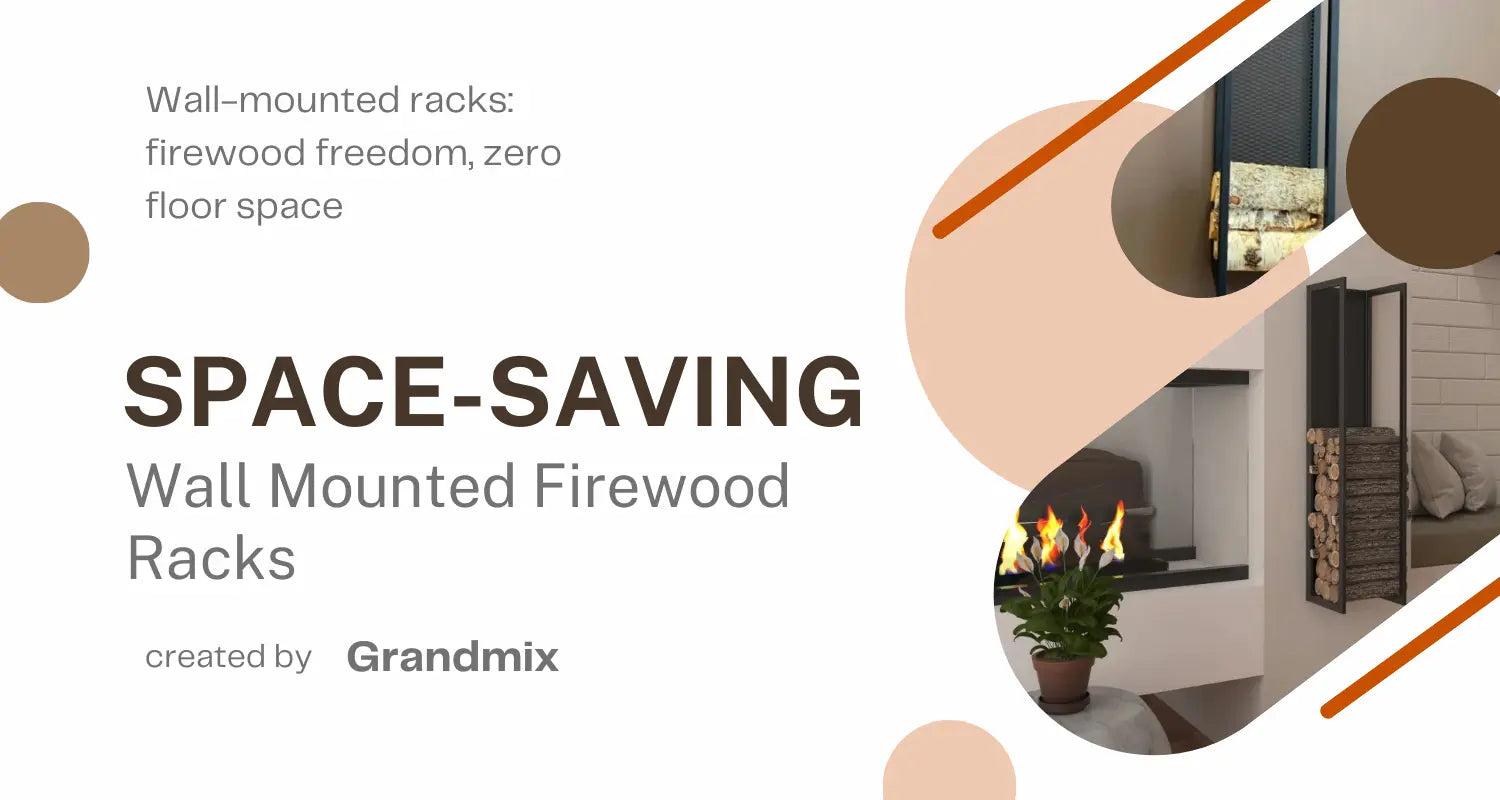
For very tight rooms where floor placement creates a trip risk, wall-mounted firewood racks may be worth considering. They are a different category, but they solve the same problem from another angle: keeping logs organized without occupying the floor.
Styling: Which One Looks Better?
The better-looking rack is the one that matches the room's proportions. A vertical rack looks best when the space can use height. A horizontal rack looks best when the fireplace wall can use width.
A vertical rack can make a fireplace corner feel taller and more designed. It works especially well beside a mantel, tall window, built-in shelf, or narrow chimney breast. In modern and minimalist rooms, a vertical metal rack can look crisp and intentional. It also pairs well with rooms where the decor already uses slim vertical lines.
A horizontal rack can make a room feel settled. It works well with wide fireplaces, stone hearths, cabin interiors, rustic spaces, and rooms where the firewood stack is meant to feel like part of the hearth. A horizontal rack can also echo the lines of a mantel, bench, low console, or long rug.
For a clean look, choose a rack finish that repeats another detail in the room. Black metal can connect with fireplace tools, light fixtures, curtain rods, picture frames, or furniture legs. White can blend into pale walls or painted brick. Gold or warm metal can work when the room already has warm hardware or lighting.
If the rack will be a visible decor element, compare decorative firewood racks and minimalist firewood racks. Decorative shapes add personality. Minimalist shapes keep the fireplace area quiet.
Best Choice for Small Spaces
For small spaces, a vertical firewood rack is usually the stronger choice. It holds logs in a compact footprint and keeps the surrounding floor clearer. This matters in apartments, narrow living rooms, guest rooms, small cabins, and homes where the fireplace is near a walkway.
The best small-space firewood setup usually has three qualities:
- A narrow footprint.
- A clean open frame.
- Enough height to hold useful wood without spreading across the room.
Vertical racks meet those needs naturally. They can tuck beside a fireplace, sit in a corner, or fill a narrow gap between the hearth and a wall. They also keep the firewood stack from becoming a wide visual block.
That said, a small horizontal rack can still work if the fireplace wall is wide but shallow. For example, a low rack under a window or along a hearth may be better than a tall rack if the room has low ceilings or if the wall already feels crowded vertically.
The deciding question is simple: do you have more unused height or more unused width? Most small rooms have more unused height, which is why vertical wins so often.
Best Choice for Frequent Fireplace Use
For frequent fireplace use, a horizontal firewood rack often feels more convenient. Logs are easier to see and reach. The stack can be organized by size. Larger pieces can sit on one side, smaller pieces on the other, and kindling can be stored nearby if the rack design allows it.
If you use the fireplace every night in cold weather, convenience matters. You do not want to fight a tight stack or restock the rack constantly. A wider horizontal rack may reduce the number of trips to the garage, porch, or outdoor storage area.
However, frequency alone does not decide everything. If your fireplace room is narrow, a tall vertical rack may still be better indoors, with bulk wood stored elsewhere. In that case, use the vertical rack as the daily-use station and keep extra wood in a larger outdoor or utility area.
The practical answer: frequent burners should prioritize capacity and reach. Occasional burners should prioritize proportion and visual fit.
Best Choice for Modern Interiors
Modern interiors often favor vertical or minimalist racks because they create clean lines without adding bulk. A vertical black metal rack beside a fireplace can look intentional, especially in rooms with simple furniture and open wall space.
Modern design usually benefits from fewer objects, stronger silhouettes, and clear material repetition. A slim vertical rack can provide all three. The wood adds warmth. The metal frame adds structure. The narrow footprint keeps the room uncluttered.
Horizontal racks can also work in modern rooms when the fireplace is wide and the rack has a very simple shape. Avoid overly ornate shapes if the room is minimal. Let the logs provide texture instead of adding too many decorative details.
If you want the firewood to feel like decor, read the styling-focused guide How to Style a Firewood Rack as Part of Your Decor after choosing the basic shape.
Best Choice for Rustic, Cabin, and Lodge Spaces
Rustic rooms, cabins, and lodge-style interiors can handle more visual weight. A horizontal rack often looks natural in these settings because it creates a generous hearth zone and supports the idea of daily wood burning.
Stone fireplaces, exposed beams, leather seating, wool rugs, and darker wood tones all pair well with a wider log stack. In this type of room, firewood is not just a small accent. It is part of the atmosphere.
Vertical racks still work in cabins when the fireplace corner is narrow or when the room has limited floor width. A tall rack beside a stone fireplace can look dramatic and efficient. But if the hearth wall is wide, horizontal usually feels more balanced.
For cabins that host guests, choose the shape that is easiest for visitors to understand and use. Horizontal racks can be more intuitive because logs are visible and easy to grab. Vertical racks can still be excellent if they are not overloaded and the stack is easy to access.
Airflow and Log Drying
Firewood should be dry before it is burned. Indoor racks are usually not meant to season large amounts of fresh wood from scratch, but airflow still matters. An open metal frame helps air move around the logs and keeps the stack from feeling damp or closed-in.
Vertical racks allow air to move around the sides when the frame is open. Because the stack is taller, avoid packing logs so tightly that air cannot move between pieces. Horizontal racks also provide good airflow when logs are stacked with some breathing room and kept off the floor.
The most important airflow factor is not orientation alone. It is whether the rack keeps wood off the floor, avoids trapping moisture, and allows space around the logs. Metal open-frame racks generally perform well for indoor storage because they do not enclose the wood.
If logs arrive damp, keep them in a better-ventilated storage area before bringing a small daily supply indoors. The indoor rack should support convenience and neatness, not replace proper seasoning.
Cleaning and Maintenance
Firewood brings bark, dust, and small debris. The rack shape affects how easy it is to clean around the fireplace.
Vertical racks concentrate debris in a smaller footprint. This can be useful in small rooms because bark and dust stay closer to one area. The downside is that if the rack is tall and tightly loaded, debris can collect between lower logs.
Horizontal racks spread debris across a wider base, but they make it easier to see and access the bottom of the stack. If the rack is raised on legs or has an open bottom, sweeping around it becomes easier.
For indoor use, a powder-coated metal rack is practical because the surface is easy to wipe. Avoid dragging logs aggressively across the finish. Load with care, clean bark debris regularly, and keep the area dry.
Decision Guide: Which Firewood Rack Should You Choose?

Choose a vertical firewood rack if:
- The fireplace area is narrow.
- You want to save floor width.
- You have a corner that needs useful storage.
- The room is modern, compact, or minimalist.
- You burn wood occasionally or restock the rack as needed.
- You want the rack to feel like a tall design accent.
Choose a horizontal firewood rack if:
- The fireplace wall is wide.
- You burn wood often.
- You want easier log access.
- You prefer a low, grounded look.
- You need more visible daily-use capacity.
- The room is rustic, traditional, cabin-like, or family-oriented.
Choose a wall-mounted rack if:
- Floor space is extremely limited.
- You want logs elevated.
- The wall can support the installation.
- You prefer a more architectural storage solution.
If you are still unsure, start with the room's constraint. If the room lacks width, choose vertical. If the room lacks accessible storage, choose horizontal.
Internal Linking Opportunities for This Topic
This comparison article should link naturally to:
- Indoor Firewood Rack as the broad category.
- Vertical Firewood Racks when discussing small spaces and narrow footprints.
- Horizontal Firewood Racks when discussing capacity and frequent use.
- Wall Mounted Firewood Racks as an alternative for tight rooms.
- Decorative Firewood Racks when the rack is part of the room design.
- How to Choose the Right Indoor Firewood Rack for a broader buying guide.
- Space Saving Wall Mounted Firewood Racks for readers with very limited space.
These links help search engines and answer engines understand the firewood rack topic cluster. They also help users move from general comparison to specific use cases without making the article feel overly commercial.
FAQ: Vertical vs Horizontal Firewood Rack
Is a vertical or horizontal firewood rack better?
A vertical firewood rack is better for small rooms, narrow corners, and compact fireplace areas. A horizontal firewood rack is better for wide hearths, easier log access, and frequent fireplace use. The best choice depends on available space and how much wood you need near the fireplace.
Do vertical firewood racks hold enough wood?
Yes, vertical firewood racks can hold enough wood for daily indoor use, especially when they are tall and deep enough for standard split logs. They are usually best as near-fireplace storage rather than full-season storage.
Are horizontal firewood racks more stable?
Horizontal racks often have a lower center of gravity, so they can feel naturally stable when loaded evenly. Vertical racks can also be stable, but they should be placed on a flat surface and loaded with heavier logs at the bottom.
Which firewood rack is best for an apartment?
A vertical firewood rack is usually best for an apartment because it saves floor width and fits more easily beside a compact fireplace. A wall-mounted rack can also work if the wall can support it and installation is allowed.
Which rack looks better in a modern living room?
A slim vertical rack or minimalist metal rack often works best in a modern living room. It adds structure and wood texture without making the fireplace area feel crowded.
Which rack is better for a cabin?
A horizontal firewood rack often works well in a cabin because it gives the hearth area a grounded, practical look and can hold more daily-use wood. A vertical rack can still work if the cabin has limited floor space.
Can I use an indoor firewood rack outside?
Some metal racks may be suitable for covered patios or protected outdoor fireplace areas, but always check the product material, coating, and placement guidance. Powder-coated galvanized metal is more resistant than untreated metal, but long-term exposure to standing water or harsh weather should still be avoided.
How far should a firewood rack be from the fireplace?
Keep the rack close enough for convenience but away from active flames, excessive heat, curtains, fabrics, and traffic paths. Follow the clearance guidance for your fireplace or stove, because safe distance can vary by appliance and room layout.
Final Recommendation
If you want the shortest practical answer, choose vertical for space-saving and horizontal for easy access. A vertical firewood rack is the better fit when the room is narrow, the fireplace area is compact, or the rack needs to act like a slim design element. A horizontal firewood rack is the better fit when the hearth is wide, the fireplace is used often, and the room can support a larger log storage shape.
For many homes, the right solution is not about maximum capacity. It is about keeping enough wood nearby while preserving the room's flow. The best firewood rack should make the fireplace easier to use, easier to clean, and better integrated into the room.
Start with the constraint you actually have. If you are fighting limited width, compare vertical firewood racks. If you are fighting limited daily storage, compare horizontal firewood racks. If the rack will sit in the main living area, also consider the broader indoor firewood rack collection and the styling guide on how to style a firewood rack as part of your decor.

Leave a comment
This site is protected by hCaptcha and the hCaptcha Privacy Policy and Terms of Service apply.