


Choosing between a shoe rack and a shoe cabinet looks like a small entryway decision, but it changes how the whole front door area works. One option keeps shoes visible, easy to grab, and open to airflow. The other hides shoes behind doors and can make the entryway look calmer at first glance. Both can be useful. The better choice depends on the size of the entryway, how many shoes need to live near the door, whether the shoes are often wet, and how disciplined the household is about putting things away.
A shoe rack is usually the stronger choice for daily shoes, narrow hallways, apartments, and households that need fast access. It creates a clear boundary without making the entryway feel heavy. A shoe cabinet is usually better when visual clutter is the main problem, when the entry has enough depth, and when shoes are already dry before they are stored. The cabinet hides the mess, but it also makes airflow, cleaning, and quick access more complicated.
This guide compares shoe racks and shoe cabinets from a practical, design, and everyday-use point of view. It is written for homeowners, renters, apartment dwellers, families, guest house hosts, and anyone trying to make an entryway look organized without turning it into a bulky storage zone.
Quick Answer: Shoe Rack vs Shoe Cabinet
A shoe rack is better for daily-use shoes, small entryways, wet climates, quick access, and better airflow. A shoe cabinet is better when you want to hide shoes completely and have enough depth for closed furniture. For most narrow entryways, an open or semi-open shoe rack is easier to use and clean. For larger foyers where visual calm matters more than speed, a cabinet can work well.
The shortest rule is simple: choose a shoe rack when the storage needs to support habits; choose a shoe cabinet when the storage needs to hide visual clutter. If the entryway often gets messy because people leave shoes on the floor, a visible rack usually fixes the behavior faster than a closed cabinet.

Comparison Table: Shoe Rack vs Shoe Cabinet
| Factor | Shoe Rack | Shoe Cabinet | Best Choice |
|---|---|---|---|
| Small entryways | Uses less visual and physical depth when slim. | Can feel bulky if the hallway is narrow. | Shoe rack |
| Airflow | Open structure helps shoes breathe and dry. | Closed doors reduce airflow unless ventilated. | Shoe rack |
| Visual clutter | Shoes stay visible, so editing matters. | Hides shoes behind doors. | Shoe cabinet |
| Daily access | Fast to use when entering or leaving. | Requires opening doors or drawers. | Shoe rack |
| Cleaning | Easy to sweep around and wipe down. | Dust and debris can collect inside. | Shoe rack |
| Formal foyer look | Works if the rack design is clean and edited. | Can look more furniture-like and calm. | Shoe cabinet |
| Kids and guests | Easy to understand because shoes are visible. | May be ignored if storage is not obvious. | Shoe rack |
| High shoe volume | Best for daily rotation, not every pair owned. | Can hold more if space allows. | Depends on editing |
What a Shoe Rack Does Best
A shoe rack works because it makes the storage rule obvious. Shoes go on the rack, not on the floor. That sounds simple, but entryways depend on simple behavior. People usually enter the home while carrying bags, mail, keys, groceries, pet items, or a phone. If the shoe storage takes extra effort, shoes land wherever the body naturally stops. A visible rack removes that decision.
An open rack is especially useful for shoes worn every day. Sneakers, slippers, sandals, work shoes, school shoes, and guest shoes are easier to manage when the household can see them. Visibility also creates a natural limit. When the rack is full, it is clear that extra pairs need to move to a closet. A cabinet can hide overflow until the inside becomes a packed, dusty pile.
A rack also supports airflow. Shoes collect moisture from weather, feet, floors, and outdoor surfaces. Open storage lets air move around each pair. That does not replace proper cleaning or drying, but it helps prevent the stale feeling that can happen when shoes are placed behind closed doors too quickly. This matters in rainy climates, snowy seasons, homes with kids, and apartments where entryways do not have much ventilation.
For Grandmix readers, this is where categories like metal shoe rack, designer shoe and slipper racks, and slipper rack fit naturally. The point is not that every entry needs a product immediately. The point is that open storage can be the simplest way to give daily footwear a clear place.
What a Shoe Cabinet Does Best
A shoe cabinet has one major advantage: it hides shoes. If the entryway opens directly into a living room, dining area, or formal foyer, visible shoes may bother the homeowner even when they are neatly arranged. A cabinet can make the entry look quieter because the footwear is behind doors or drawers. In a larger space, that can feel more polished.
Cabinets can also hold more pairs when they are deep enough and well designed. This can work for households that want most footwear near the door but do not want open shelves. A cabinet may also provide a flat top for a tray, lamp, mirror, or small decorative object. In that sense, it can act like furniture rather than purely functional storage.
The tradeoff is that closed storage asks more from the household. Shoes should be dry before they go inside. The cabinet needs to be opened and closed every time. The interior needs occasional cleaning. If the shelves are too tight, shoes get crushed or shoved in sideways. If the cabinet is deep, it may narrow the walking path. A cabinet can solve the visual problem while creating a maintenance problem if the entryway is small or busy.
For that reason, shoe cabinets work best when the home already has good habits. If shoes are usually cleaned, dried, and put away, a cabinet can keep the foyer calm. If shoes are usually dropped in a hurry, an open rack often corrects the habit more effectively.
Which Is Better for a Small Entryway?
For most small entryways, a shoe rack is better than a shoe cabinet. The main reason is depth. A narrow hallway or apartment entry needs clear walking space. A slim rack can sit along a wall, under hooks, beside a door, or near a mat without behaving like a large piece of furniture. A cabinet may hide shoes, but if it sticks too far into the path, the entryway can feel cramped even when it looks tidy.
Small entryways also benefit from visible boundaries. If there is room for six pairs on the rack, that becomes the rule. The daily rotation stays near the door, and extra pairs move elsewhere. This is often more effective than a cabinet with hidden capacity, because hidden storage invites more hidden accumulation.
A small space also needs easy cleaning. Open racks make it easier to sweep, vacuum, or wipe around the shoe zone. Dirt, leaves, salt, and dust are part of real entryway life. A rack that lifts shoes slightly off the floor can make the area easier to reset. A cabinet may keep the exterior looking clean while the inside collects debris.
The exception is a small but visually prominent foyer where shoes must be hidden. In that case, choose the shallowest cabinet that works, avoid storing wet shoes inside, and keep the top surface clear. But if the main problem is daily clutter rather than formal appearance, a rack is usually the more reliable solution.
Which Is Better for Airflow and Odor Control?
An open shoe rack is usually better for airflow and odor control. Shoes need air, especially after being worn all day or after contact with rain, snow, mud, or humidity. Open shelves allow moisture to escape more easily. Closed cabinets can trap odor if shoes are stored before they are dry.
This does not mean every cabinet causes odor. Some cabinets are ventilated, and some households dry shoes elsewhere before storing them. But in everyday use, many people put shoes away quickly. If the storage is closed, that moisture has fewer places to go. Over time, the cabinet may need more frequent cleaning and airing out.
A metal rack can be practical here because it does not absorb moisture like some porous materials can. It is also easy to wipe down. For an entryway that sees wet shoes, choose open storage, use a mat or tray below the rack, and avoid crowding pairs too tightly. Air needs space to move.
If you prefer a cabinet, treat it as storage for dry shoes. Wet boots, gym shoes, and rain-soaked footwear should sit in an open zone first. Once dry, they can move into closed storage if visual hiding is important.
Which Is Better for Families?
Families usually do better with shoe racks because the system is visible and easy to understand. Children are more likely to use storage when they can see exactly where items go. A closed cabinet can work for adults, but children may leave shoes in front of it rather than opening doors, finding a shelf, and closing it again.
Family entryways also change throughout the week. School shoes, sports shoes, boots, sandals, and slippers rotate quickly. An open rack makes that rotation easier to manage. Parents can see when too many pairs have collected and reset the space before it becomes chaotic.
The best family system is not necessarily the largest rack. It is a rack with a clear limit. Give each person one or two spaces. Keep school or work shoes near the door and move off-season pairs to bedrooms, closets, or bins. If indoor slippers are part of the household routine, use a separate slipper zone so outdoor shoes and indoor footwear do not mix.
A cabinet can still work in a family home if it is low, easy to open, ventilated, and not overloaded. But when the goal is everyday compliance, a rack usually wins because it asks less effort from everyone.
Which Looks Better in a Modern Entryway?
Both can look good in a modern entryway, but they create different moods. A cabinet looks more like furniture. It can create a smooth, uninterrupted visual field. That works well in larger foyers, minimalist homes, and spaces where the entry is visible from the living area. The risk is bulk. If the cabinet is too deep or too heavy, it can make the entry feel smaller
Shoe Rack vs Shoe Cabinet: Which Entryway Storage Works Better?
Choosing between a shoe rack and a shoe cabinet looks like a small entryway decision, but it changes how the whole front door area works. One option keeps shoes visible, easy to grab, and open to airflow. The other hides shoes behind doors and can make the entryway look calmer at first glance. Both can be useful. The better choice depends on the size of the entryway, how many shoes need to live near the door, whether the shoes are often wet, and how disciplined the household is about putting things away.
A shoe rack is usually the stronger choice for daily shoes, narrow hallways, apartments, and households that need fast access. It creates a clear boundary without making the entryway feel heavy. A shoe cabinet is usually better when visual clutter is the main problem, when the entry has enough depth, and when shoes are already dry before they are stored. The cabinet hides the mess, but it also makes airflow, cleaning, and quick access more complicated.
This guide compares shoe racks and shoe cabinets from a practical, design, and everyday-use point of view. It is written for homeowners, renters, apartment dwellers, families, guest house hosts, and anyone trying to make an entryway look organized without turning it into a bulky storage zone.
Quick Answer: Shoe Rack vs Shoe Cabinet
A shoe rack is better for daily-use shoes, small entryways, wet climates, quick access, and better airflow. A shoe cabinet is better when you want to hide shoes completely and have enough depth for closed furniture. For most narrow entryways, an open or semi-open shoe rack is easier to use and clean. For larger foyers where visual calm matters more than speed, a cabinet can work well.
The shortest rule is simple: choose a shoe rack when the storage needs to support habits; choose a shoe cabinet when the storage needs to hide visual clutter. If the entryway often gets messy because people leave shoes on the floor, a visible rack usually fixes the behavior faster than a closed cabinet.

Comparison Table: Shoe Rack vs Shoe Cabinet
| Factor | Shoe Rack | Shoe Cabinet | Best Choice |
|---|---|---|---|
| Small entryways | Uses less visual and physical depth when slim. | Can feel bulky if the hallway is narrow. | Shoe rack |
| Airflow | Open structure helps shoes breathe and dry. | Closed doors reduce airflow unless ventilated. | Shoe rack |
| Visual clutter | Shoes stay visible, so editing matters. | Hides shoes behind doors. | Shoe cabinet |
| Daily access | Fast to use when entering or leaving. | Requires opening doors or drawers. | Shoe rack |
| Cleaning | Easy to sweep around and wipe down. | Dust and debris can collect inside. | Shoe rack |
| Formal foyer look | Works if the rack design is clean and edited. | Can look more furniture-like and calm. | Shoe cabinet |
| Kids and guests | Easy to understand because shoes are visible. | May be ignored if storage is not obvious. | Shoe rack |
| High shoe volume | Best for daily rotation, not every pair owned. | Can hold more if space allows. | Depends on editing |
What a Shoe Rack Does Best
A shoe rack works because it makes the storage rule obvious. Shoes go on the rack, not on the floor. That sounds simple, but entryways depend on simple behavior. People usually enter the home while carrying bags, mail, keys, groceries, pet items, or a phone. If the shoe storage takes extra effort, shoes land wherever the body naturally stops. A visible rack removes that decision.
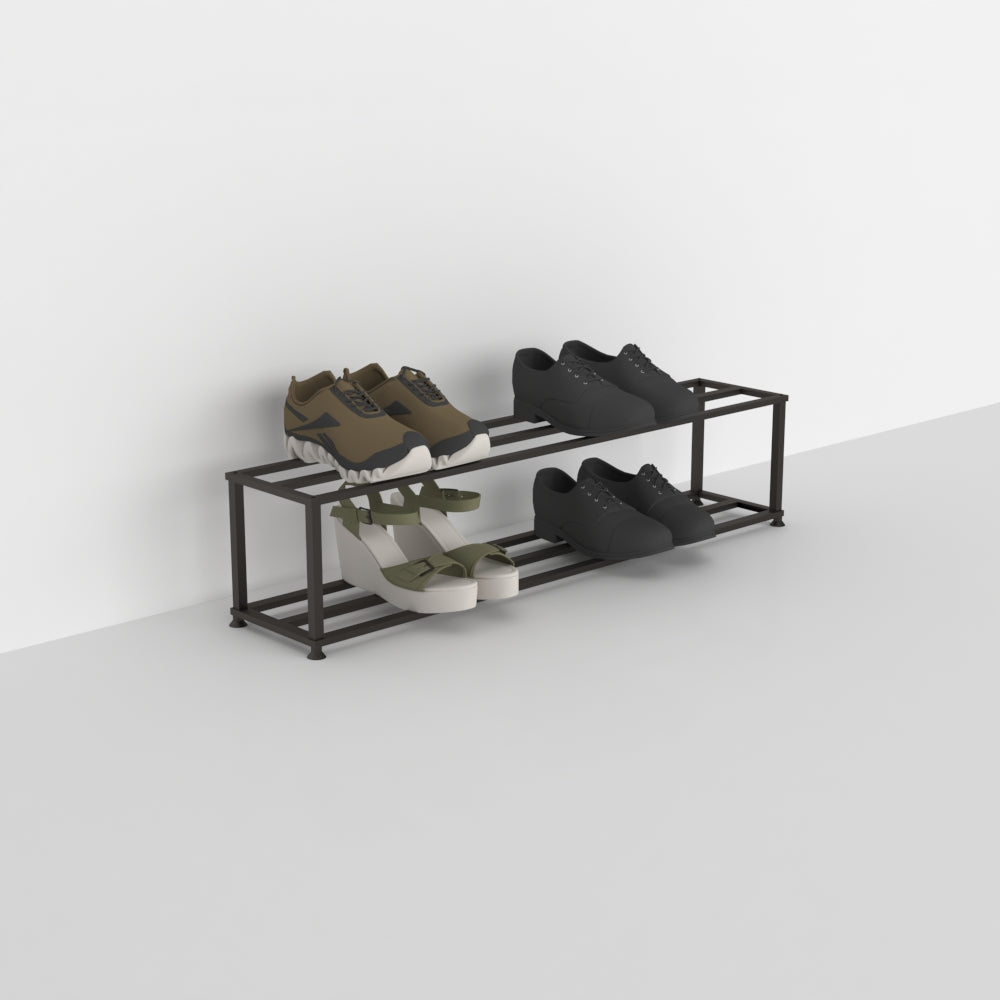
An open rack is especially useful for shoes worn every day. Sneakers, slippers, sandals, work shoes, school shoes, and guest shoes are easier to manage when the household can see them. Visibility also creates a natural limit. When the rack is full, it is clear that extra pairs need to move to a closet. A cabinet can hide overflow until the inside becomes a packed, dusty pile.
A rack also supports airflow. Shoes collect moisture from weather, feet, floors, and outdoor surfaces. Open storage lets air move around each pair. That does not replace proper cleaning or drying, but it helps prevent the stale feeling that can happen when shoes are placed behind closed doors too quickly. This matters in rainy climates, snowy seasons, homes with kids, and apartments where entryways do not have much ventilation.
For Grandmix readers, this is where categories like metal shoe rack, designer shoe and slipper racks, and slipper rack fit naturally. The point is not that every entry needs a product immediately. The point is that open storage can be the simplest way to give daily footwear a clear place.
What a Shoe Cabinet Does Best
A shoe cabinet has one major advantage: it hides shoes. If the entryway opens directly into a living room, dining area, or formal foyer, visible shoes may bother the homeowner even when they are neatly arranged. A cabinet can make the entry look quieter because the footwear is behind doors or drawers. In a larger space, that can feel more polished.
Cabinets can also hold more pairs when they are deep enough and well designed. This can work for households that want most footwear near the door but do not want open shelves. A cabinet may also provide a flat top for a tray, lamp, mirror, or small decorative object. In that sense, it can act like furniture rather than purely functional storage.
The tradeoff is that closed storage asks more from the household. Shoes should be dry before they go inside. The cabinet needs to be opened and closed every time. The interior needs occasional cleaning. If the shelves are too tight, shoes get crushed or shoved in sideways. If the cabinet is deep, it may narrow the walking path. A cabinet can solve the visual problem while creating a maintenance problem if the entryway is small or busy.
For that reason, shoe cabinets work best when the home already has good habits. If shoes are usually cleaned, dried, and put away, a cabinet can keep the foyer calm. If shoes are usually dropped in a hurry, an open rack often corrects the habit more effectively.
Which Is Better for a Small Entryway?
For most small entryways, a shoe rack is better than a shoe cabinet. The main reason is depth. A narrow hallway or apartment entry needs clear walking space. A slim rack can sit along a wall, under hooks, beside a door, or near a mat without behaving like a large piece of furniture. A cabinet may hide shoes, but if it sticks too far into the path, the entryway can feel cramped even when it looks tidy.
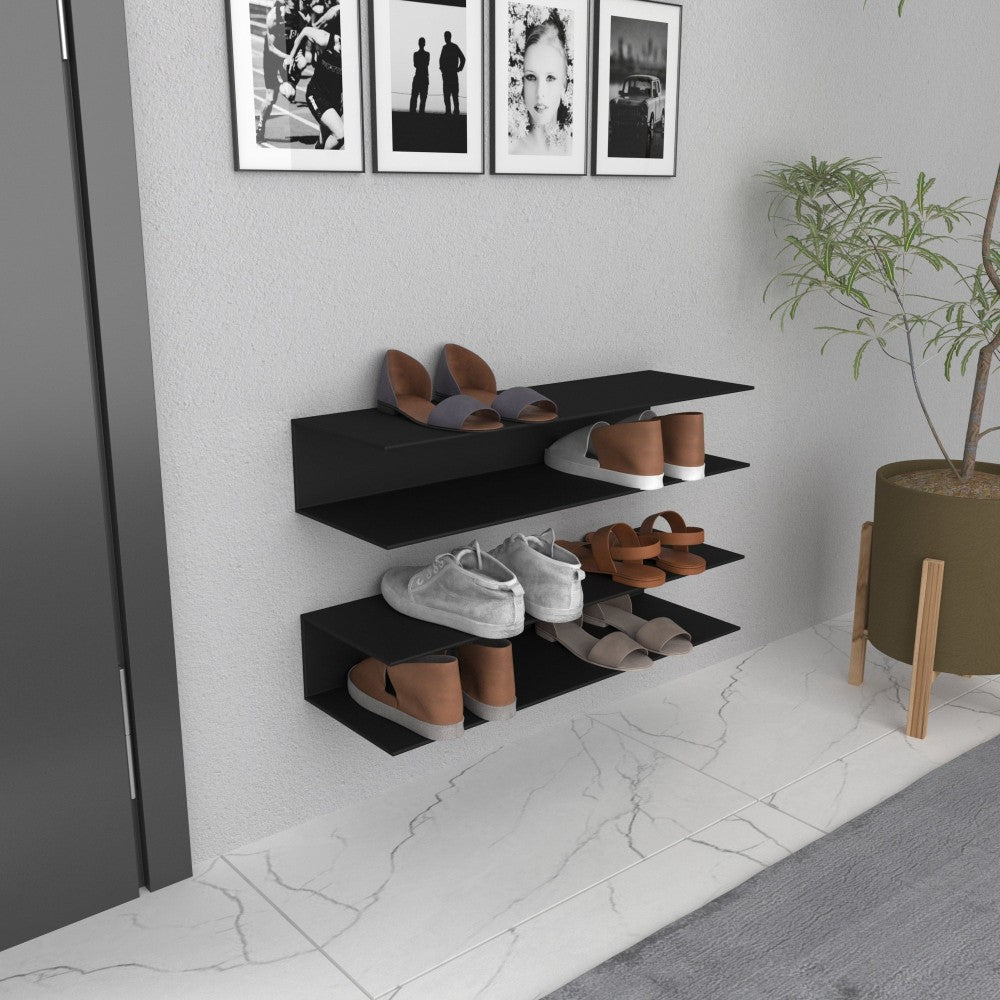
Small entryways also benefit from visible boundaries. If there is room for six pairs on the rack, that becomes the rule. The daily rotation stays near the door, and extra pairs move elsewhere. This is often more effective than a cabinet with hidden capacity, because hidden storage invites more hidden accumulation.
A small space also needs easy cleaning. Open racks make it easier to sweep, vacuum, or wipe around the shoe zone. Dirt, leaves, salt, and dust are part of real entryway life. A rack that lifts shoes slightly off the floor can make the area easier to reset. A cabinet may keep the exterior looking clean while the inside collects debris.
The exception is a small but visually prominent foyer where shoes must be hidden. In that case, choose the shallowest cabinet that works, avoid storing wet shoes inside, and keep the top surface clear. But if the main problem is daily clutter rather than formal appearance, a rack is usually the more reliable solution.
Which Is Better for Airflow and Odor Control?
An open shoe rack is usually better for airflow and odor control. Shoes need air, especially after being worn all day or after contact with rain, snow, mud, or humidity. Open shelves allow moisture to escape more easily. Closed cabinets can trap odor if shoes are stored before they are dry.
This does not mean every cabinet causes odor. Some cabinets are ventilated, and some households dry shoes elsewhere before storing them. But in everyday use, many people put shoes away quickly. If the storage is closed, that moisture has fewer places to go. Over time, the cabinet may need more frequent cleaning and airing out.
A metal rack can be practical here because it does not absorb moisture like some porous materials can. It is also easy to wipe down. For an entryway that sees wet shoes, choose open storage, use a mat or tray below the rack, and avoid crowding pairs too tightly. Air needs space to move.
If you prefer a cabinet, treat it as storage for dry shoes. Wet boots, gym shoes, and rain-soaked footwear should sit in an open zone first. Once dry, they can move into closed storage if visual hiding is important.
Which Is Better for Families?
Families usually do better with shoe racks because the system is visible and easy to understand. Children are more likely to use storage when they can see exactly where items go. A closed cabinet can work for adults, but children may leave shoes in front of it rather than opening doors, finding a shelf, and closing it again.
Family entryways also change throughout the week. School shoes, sports shoes, boots, sandals, and slippers rotate quickly. An open rack makes that rotation easier to manage. Parents can see when too many pairs have collected and reset the space before it becomes chaotic.
The best family system is not necessarily the largest rack. It is a rack with a clear limit. Give each person one or two spaces. Keep school or work shoes near the door and move off-season pairs to bedrooms, closets, or bins. If indoor slippers are part of the household routine, use a separate slipper zone so outdoor shoes and indoor footwear do not mix.
A cabinet can still work in a family home if it is low, easy to open, ventilated, and not overloaded. But when the goal is everyday compliance, a rack usually wins because it asks less effort from everyone.
Which Looks Better in a Modern Entryway?
Both can look good in a modern entryway, but they create different moods. A cabinet looks more like furniture. It can create a smooth, uninterrupted visual field. That works well in larger foyers, minimalist homes, and spaces where the entry is visible from the living area. The risk is bulk. If the cabinet is too deep or too heavy, it can make the entry feel smaller.
A shoe rack looks lighter when the design is slim and the shoes are edited. Metal racks are especially useful in modern spaces because the open frame feels less heavy than a solid block. A black metal rack can connect with a metal mirror frame, coat hooks, umbrella stand, console legs, or wall decor. That repetition makes the rack feel intentional rather than temporary.
The key is editing. An open rack with four neat pairs can look designed. An open rack stuffed with mismatched shoes will look messy. A cabinet can hide that mess, but if shoes spill out around it, the cabinet no longer solves the problem. Modern design rewards systems that are easy to maintain.
For a cleaner entryway, pair shoe storage with related zones. A wall-mounted coat rack can keep jackets off the floor. An umbrella stand can prevent wet umbrellas from leaning against the wall. These pieces support the shoe zone without making the blog post feel like a product page.
How to Decide Based on Shoe Count
Shoe count matters, but not in the way people expect. The right question is not how many shoes the household owns. The right question is how many pairs need to be near the door every day. A household might own forty pairs, but only six belong in the entryway. The rest should live in closets or seasonal storage.
A shoe rack works best for a tight daily rotation. Think of it as active storage, not full wardrobe storage. It should hold the pairs that are worn most often this week. If the rack is always overflowing, the solution may be editing rather than buying a bigger rack.
A shoe cabinet can handle a larger count, but capacity can become a trap. When storage is hidden, it is easier to keep adding pairs until the cabinet becomes hard to use. If you choose a cabinet, assign zones inside it: daily shoes, guest slippers, seasonal shoes, or each person’s shelf. Without a system, the cabinet becomes a dark pile.
For most homes, the strongest setup is a small visible rack near the door plus deeper shoe storage elsewhere. The rack handles daily movement. The closet handles volume. This keeps the entryway useful without asking it to store everything.
How to Decide Based on Cleaning
Cleaning is one of the most overlooked parts of shoe storage. Entryways collect grit, dust, hair, leaves, salt, and moisture. If the storage is difficult to clean, the entryway will slowly feel dirty even when the shoes are technically organized.
Open racks are easier to clean around because the structure is visible. You can see what has collected below or behind the rack. Metal surfaces are easy to wipe. If the rack has legs or an open base, sweeping is simple. A tray or washable mat below the rack can catch dirt from daily shoes.
Cabinets hide dirt until cleaning day. Debris can collect on shelves and in corners. If shoes are placed inside while damp, the cabinet may need airing out. If the doors are close to the floor, dust can build up around the base. None of this makes cabinets bad, but it means they require more intentional maintenance.
If the entryway is used by kids, pets, guests, or anyone coming in from a garden, garage, or wet sidewalk, an open rack is usually the lower-maintenance choice. If the entryway is mostly formal and shoes are already clean before storage, a cabinet can stay tidy with less daily visual exposure.
How to Decide Based on Door Swing and Walking Path
Before choosing any storage, measure the entryway. Door swing and walking path matter more than product photos. A cabinet that looks compact online may block a door, narrow a hallway, or make it awkward for two people to pass. A rack that is low and slim may fit where a cabinet cannot.
Open the front door fully. Open nearby closet doors. Walk through the entry while carrying a bag. Notice where people naturally pause to remove shoes. The shoe storage should support that movement, not interrupt it. If the best landing spot is shallow, choose a rack. If there is a wider wall or alcove, a cabinet may be possible.
Also consider height. A tall cabinet can add storage but may make a small entry feel boxed in. A low rack preserves more wall space for hooks, art, or a mirror. In a narrow hallway, keeping furniture low can make the area feel more open.
For renters, a rack also has flexibility. It can move when the layout changes. A cabinet is heavier and may be harder to place in the next home. That makes racks a practical option for apartments, dorm-style spaces, and temporary living situations.
When a Hybrid Setup Works Best
The best answer is sometimes both. A hybrid system uses an open rack for daily shoes and a closed cabinet or closet for less-used pairs. This approach solves the main weakness of each option. The rack keeps habits easy. The cabinet hides overflow.
For example, a family might keep school shoes, work shoes, and slippers on an open rack near the door. Seasonal boots, dress shoes, and sports shoes can live in a closet or cabinet. Guests see a tidy daily station rather than a full footwear collection.
In a larger foyer, a low cabinet can hold occasional shoes while a small rack or tray handles wet shoes temporarily. Once shoes dry, they move into the cabinet. This avoids trapping moisture while still preserving a clean look.
Hybrid systems are especially useful when the home has different users with different habits. Adults may prefer hidden storage. Children may need visible storage. Guests may need an obvious place for shoes. A combination lets each need have a clear zone.
Internal Linking for the Entryway Storage Cluster
This comparison sits naturally inside an entryway and home organization topic cluster. Readers who are comparing storage types may also need broader layout ideas, shoe-specific ideas, or related entryway accessories.
For broader organization, the article should connect to entryway storage and the existing guide on small entryway storage ideas that actually work. For shoe-focused readers, it should link to metal shoe rack, designer shoe and slipper racks, and space-saving shoe rack ideas.
The same entryway problem often includes coats, bags, and wet-weather items, so links to wall-mounted coat racks and umbrella stands also make sense when they appear in context. These links help users move through related questions without turning the article into a sales pitch.
Decision Guide: Choose a Shoe Rack If...
- The entryway is narrow or the door area has limited depth.
- You need a place for daily shoes, not every pair in the house.
- Shoes are often damp, muddy, or worn for long hours.
- Kids, guests, or busy household members need an obvious storage cue.
- You want easy sweeping, wiping, and weekly reset.
- You prefer lightweight, flexible storage that can move if the layout changes.
Decision Guide: Choose a Shoe Cabinet If...
- The entryway is wide enough for deeper furniture.
- Visual hiding matters more than immediate access.
- Shoes are usually dry and clean before they are stored.
- The household already has strong put-away habits.
- You want the storage piece to look like furniture.
- You can clean and air out the cabinet regularly.
FAQ: Shoe Rack vs Shoe Cabinet
Is a shoe rack or shoe cabinet better for a small entryway?
A shoe rack is usually better for a small entryway because it uses less depth, keeps daily shoes easy to access, and is easier to clean around. A shoe cabinet can work if the entry has enough width and the main goal is hiding shoes.
Do shoe cabinets cause odor?
Shoe cabinets can trap odor if shoes are stored while damp or dirty. Ventilated cabinets and regular cleaning help, but open shoe racks generally provide better airflow for daily-use footwear.
Are open shoe racks messy?
Open shoe racks can look messy if they are overloaded. They work best when they hold only the daily rotation of shoes. Keeping one or two pairs per person near the door usually makes the rack look intentional rather than cluttered.
What is the best shoe storage for families?
Families often do best with visible shoe racks because children and guests can understand the system quickly. A hybrid setup can also work: a rack for daily shoes and a closet or cabinet for extra pairs.
Are metal shoe racks better than wooden shoe cabinets?
Metal shoe racks are often better for airflow, cleaning, and narrow spaces. Wooden shoe cabinets can be better for hiding shoes and creating a furniture-like look. The better choice depends on whether the entryway needs daily access or visual hiding.
How many shoes should stay near the front door?
Keep only the active daily rotation near the front door. For many households, that means one or two pairs per person plus guest slippers or seasonal essentials. Extra shoes should move to a closet or longer-term storage area.
Final Takeaway
A shoe rack and a shoe cabinet solve different entryway problems. A shoe rack is best when the space needs airflow, quick access, easy cleaning, and a visible habit cue. A shoe cabinet is best when the space has enough depth and the main goal is hiding shoes from view. Neither option works well if it is asked to store every pair the household owns.
For most active entryways, start with a clear daily shoe zone. Keep the pairs used this week near the door, move everything else elsewhere, and choose storage that people will actually use when they are in a hurry. That is usually the difference between an entryway that looks organized for one day and an entryway that stays organized through real life.
A shoe rack looks lighter when the design is slim and the shoes are edited. Metal racks are especially useful in modern spaces because the open frame feels less heavy than a solid block. A black metal rack can connect with a metal mirror frame, coat hooks, umbrella stand, console legs, or wall decor. That repetition makes the rack feel intentional rather than temporary.
The key is editing. An open rack with four neat pairs can look designed. An open rack stuffed with mismatched shoes will look messy. A cabinet can hide that mess, but if shoes spill out around it, the cabinet no longer solves the problem. Modern design rewards systems that are easy to maintain.
For a cleaner entryway, pair shoe storage with related zones. A wall-mounted coat rack can keep jackets off the floor. An umbrella stand can prevent wet umbrellas from leaning against the wall. These pieces support the shoe zone without making the blog post feel like a product page.
How to Decide Based on Shoe Count
Shoe count matters, but not in the way people expect. The right question is not how many shoes the household owns. The right question is how many pairs need to be near the door every day. A household might own forty pairs, but only six belong in the entryway. The rest should live in closets or seasonal storage.
A shoe rack works best for a tight daily rotation. Think of it as active storage, not full wardrobe storage. It should hold the pairs that are worn most often this week. If the rack is always overflowing, the solution may be editing rather than buying a bigger rack.
A shoe cabinet can handle a larger count, but capacity can become a trap. When storage is hidden, it is easier to keep adding pairs until the cabinet becomes hard to use. If you choose a cabinet, assign zones inside it: daily shoes, guest slippers, seasonal shoes, or each person’s shelf. Without a system, the cabinet becomes a dark pile.
For most homes, the strongest setup is a small visible rack near the door plus deeper shoe storage elsewhere. The rack handles daily movement. The closet handles volume. This keeps the entryway useful without asking it to store everything.
How to Decide Based on Cleaning
Cleaning is one of the most overlooked parts of shoe storage. Entryways collect grit, dust, hair, leaves, salt, and moisture. If the storage is difficult to clean, the entryway will slowly feel dirty even when the shoes are technically organized.
Open racks are easier to clean around because the structure is visible. You can see what has collected below or behind the rack. Metal surfaces are easy to wipe. If the rack has legs or an open base, sweeping is simple. A tray or washable mat below the rack can catch dirt from daily shoes.
Cabinets hide dirt until cleaning day. Debris can collect on shelves and in corners. If shoes are placed inside while damp, the cabinet may need airing out. If the doors are close to the floor, dust can build up around the base. None of this makes cabinets bad, but it means they require more intentional maintenance.
If the entryway is used by kids, pets, guests, or anyone coming in from a garden, garage, or wet sidewalk, an open rack is usually the lower-maintenance choice. If the entryway is mostly formal and shoes are already clean before storage, a cabinet can stay tidy with less daily visual exposure.
How to Decide Based on Door Swing and Walking Path
Before choosing any storage, measure the entryway. Door swing and walking path matter more than product photos. A cabinet that looks compact online may block a door, narrow a hallway, or make it awkward for two people to pass. A rack that is low and slim may fit where a cabinet cannot.
Open the front door fully. Open nearby closet doors. Walk through the entry while carrying a bag. Notice where people naturally pause to remove shoes. The shoe storage should support that movement, not interrupt it. If the best landing spot is shallow, choose a rack. If there is a wider wall or alcove, a cabinet may be possible.
Also consider height. A tall cabinet can add storage but may make a small entry feel boxed in. A low rack preserves more wall space for hooks, art, or a mirror. In a narrow hallway, keeping furniture low can make the area feel more open.
For renters, a rack also has flexibility. It can move when the layout changes. A cabinet is heavier and may be harder to place in the next home. That makes racks a practical option for apartments, dorm-style spaces, and temporary living situations.
When a Hybrid Setup Works Best
The best answer is sometimes both. A hybrid system uses an open rack for daily shoes and a closed cabinet or closet for less-used pairs. This approach solves the main weakness of each option. The rack keeps habits easy. The cabinet hides overflow.
For example, a family might keep school shoes, work shoes, and slippers on an open rack near the door. Seasonal boots, dress shoes, and sports shoes can live in a closet or cabinet. Guests see a tidy daily station rather than a full footwear collection.
In a larger foyer, a low cabinet can hold occasional shoes while a small rack or tray handles wet shoes temporarily. Once shoes dry, they move into the cabinet. This avoids trapping moisture while still preserving a clean look.
Hybrid systems are especially useful when the home has different users with different habits. Adults may prefer hidden storage. Children may need visible storage. Guests may need an obvious place for shoes. A combination lets each need have a clear zone.
Internal Linking for the Entryway Storage Cluster
This comparison sits naturally inside an entryway and home organization topic cluster. Readers who are comparing storage types may also need broader layout ideas, shoe-specific ideas, or related entryway accessories.
For broader organization, the article should connect to entryway storage and the existing guide on small entryway storage ideas that actually work. For shoe-focused readers, it should link to metal shoe rack, designer shoe and slipper racks, and space-saving shoe rack ideas.
The same entryway problem often includes coats, bags, and wet-weather items, so links to wall-mounted coat racks and umbrella stands also make sense when they appear in context. These links help users move through related questions without turning the article into a sales pitch.
Decision Guide: Choose a Shoe Rack If...
- The entryway is narrow or the door area has limited depth.
- You need a place for daily shoes, not every pair in the house.
- Shoes are often damp, muddy, or worn for long hours.
- Kids, guests, or busy household members need an obvious storage cue.
- You want easy sweeping, wiping, and weekly reset.
- You prefer lightweight, flexible storage that can move if the layout changes.
Decision Guide: Choose a Shoe Cabinet If...
- The entryway is wide enough for deeper furniture.
- Visual hiding matters more than immediate access.
- Shoes are usually dry and clean before they are stored.
- The household already has strong put-away habits.
- You want the storage piece to look like furniture.
- You can clean and air out the cabinet regularly.
FAQ: Shoe Rack vs Shoe Cabinet
Is a shoe rack or shoe cabinet better for a small entryway?
A shoe rack is usually better for a small entryway because it uses less depth, keeps daily shoes easy to access, and is easier to clean around. A shoe cabinet can work if the entry has enough width and the main goal is hiding shoes.
Do shoe cabinets cause odor?
Shoe cabinets can trap odor if shoes are stored while damp or dirty. Ventilated cabinets and regular cleaning help, but open shoe racks generally provide better airflow for daily-use footwear.
Are open shoe racks messy?
Open shoe racks can look messy if they are overloaded. They work best when they hold only the daily rotation of shoes. Keeping one or two pairs per person near the door usually makes the rack look intentional rather than cluttered.
What is the best shoe storage for families?
Families often do best with visible shoe racks because children and guests can understand the system quickly. A hybrid setup can also work: a rack for daily shoes and a closet or cabinet for extra pairs.
Are metal shoe racks better than wooden shoe cabinets?
Metal shoe racks are often better for airflow, cleaning, and narrow spaces. Wooden shoe cabinets can be better for hiding shoes and creating a furniture-like look. The better choice depends on whether the entryway needs daily access or visual hiding.
How many shoes should stay near the front door?
Keep only the active daily rotation near the front door. For many households, that means one or two pairs per person plus guest slippers or seasonal essentials. Extra shoes should move to a closet or longer-term storage area.
Final Takeaway
A shoe rack and a shoe cabinet solve different entryway problems. A shoe rack is best when the space needs airflow, quick access, easy cleaning, and a visible habit cue. A shoe cabinet is best when the space has enough depth and the main goal is hiding shoes from view. Neither option works well if it is asked to store every pair the household owns.
For most active entryways, start with a clear daily shoe zone. Keep the pairs used this week near the door, move everything else elsewhere, and choose storage that people will actually use when they are in a hurry. That is usually the difference between an entryway that looks organized for one day and an entryway that stays organized through real life.

Leave a comment
This site is protected by hCaptcha and the hCaptcha Privacy Policy and Terms of Service apply.