


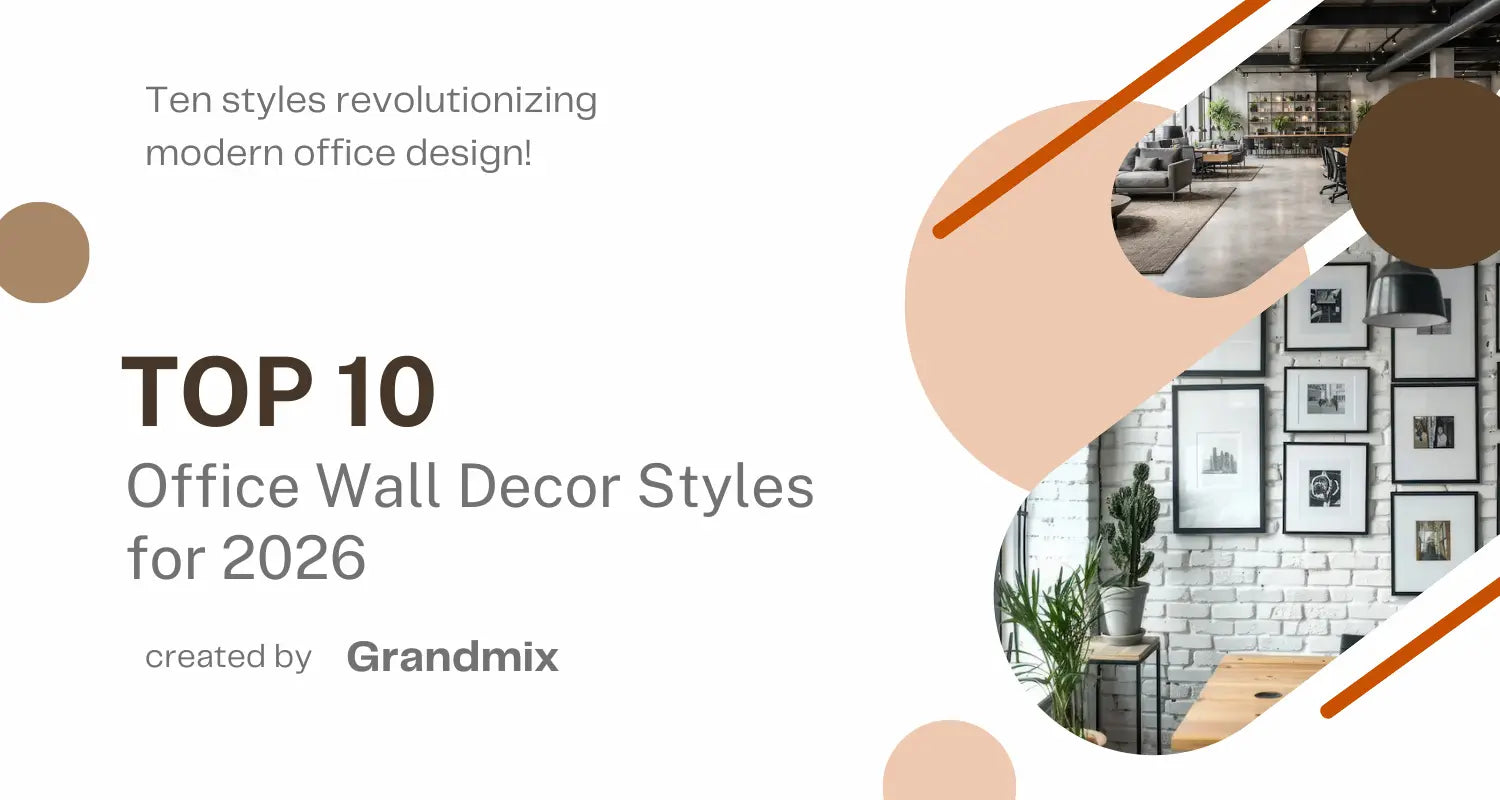
The landscape of office wall decor is evolving rapidly as we move into 2026, with workplace aesthetics becoming increasingly important for productivity and well-being. Whether you're designing a home office or refreshing a corporate space, understanding the dominant style trends can help you create an environment that inspires creativity and focus. These ten office wall decor styles are shaping workspaces this year, each offering unique visual languages and psychological benefits.
Professional environments no longer demand sterile, uninspiring walls. Today's office spaces reflect personality, support mental health, and enhance concentration through thoughtful design choices. If you're looking for specific implementation ideas within these styles, our comprehensive guide on 32 creative office wall decor ideas provides detailed suggestions for bringing these aesthetics to life.
1. Industrial Minimalist
The industrial minimalist style continues to dominate modern office spaces in 2026, combining raw materials with clean lines and functional design. This aesthetic celebrates exposed elements like metal frames, concrete textures, and weathered wood while maintaining an uncluttered visual field. The beauty lies in the tension between rough industrial elements and the restraint of minimalist principles.

Wall treatments in this style often feature metal wall art with geometric patterns, Edison bulb fixtures mounted directly to walls, and open shelving with industrial pipe brackets. The color palette remains intentionally limited—typically charcoal grays, blacks, whites, and raw metal tones. This approach creates sophisticated workspaces that feel both grounded and forward-thinking, particularly effective in urban loft conversions and creative studios.
The psychological impact shouldn't be underestimated. Industrial minimalist environments reduce visual clutter, which research shows can decrease cognitive load and improve focus. The honest materiality of exposed elements creates authenticity in the workspace, fostering straightforward thinking and problem-solving.
2. Biophilic Natural
Biophilic office design has moved from trend to necessity as remote work and hybrid schedules blur the boundaries between home and office. This style brings natural elements directly into workspace walls through living plant installations, natural wood paneling, and nature-inspired artwork. The connection to the natural world isn't just aesthetic—it's a response to our biological need for contact with living systems.
Wall applications include vertical gardens with integrated irrigation systems, reclaimed wood accent walls with preserved bark textures, and large-format nature photography or botanical prints. Some offices are incorporating actual tree branches as sculptural wall elements or using moss walls that require minimal maintenance. The textures are varied and organic, creating visual interest without overwhelming the senses.
Studies consistently show that biophilic elements in offices reduce stress hormones, improve air quality, and increase creativity. Employees working in spaces with natural elements report higher job satisfaction and demonstrate measurably better cognitive function. For 2026, this style is expanding beyond potted plants to become fully integrated into architectural wall treatments.
3. Gallery Curator
The gallery curator style transforms office walls into carefully curated exhibition spaces, treating the workplace as a living art collection. This sophisticated approach arranges artwork, photography, and visual elements with the precision of a museum installation. Unlike casual picture hanging, this style requires thoughtful consideration of scale, spacing, and visual relationships between pieces.

Implementation involves salon-style arrangements where multiple pieces interact across a wall section, creating visual narratives. Consistent framing within collections maintains cohesion while varied subject matter provides interest. Gallery lighting—picture lights or track systems—elevates the presentation, making each piece feel intentional and valued. The style works exceptionally well in creative industries, design studios, and executive offices where visual sophistication matters.
This approach communicates cultural awareness and attention to detail. It signals to clients and employees that the organization values creativity and invests in quality. The rotating nature of gallery walls—pieces can be swapped seasonally—keeps the environment fresh and prevents visual staleness that can occur in static office designs.
4. Scandinavian Hygge
Scandinavian hygge aesthetics bring warmth and coziness to office environments through soft textures, natural materials, and a soothing color palette. This style counters the cold efficiency often associated with workplaces, instead creating spaces that feel nurturing and comfortable. The Danish concept of "hygge"—roughly translated as cozy contentment—drives every design decision.
Wall treatments emphasize light woods like birch and ash, soft textile wall hangings in neutral tones, and simple line drawings or abstract art in muted colors. Woven baskets mounted as wall sculptures add texture while maintaining the organic feel. The palette stays within creams, soft grays, warm whites, and gentle earth tones. Lighting is warm-toned and diffused, never harsh or clinical.
This style addresses the growing awareness of workplace well-being. Hygge office walls create psychological safety, encouraging employees to feel comfortable and authentic. The aesthetic works particularly well in collaborative spaces, counseling offices, and any environment where human connection and emotional comfort are priorities.
5. Tech-Forward Digital
The tech-forward digital style embraces technology as a design element rather than hiding it. Digital displays, interactive wall panels, and LED installations become integral to the wall aesthetic. This approach is gaining momentum in 2026 as display technology becomes thinner, more energy-efficient, and more affordable.

Applications include digital art displays that rotate artwork throughout the day, ambient LED panels that change color based on time or productivity metrics, and interactive whiteboards with sleek frames that double as design elements. Some offices are incorporating transparent OLED displays that can switch between showing information and becoming nearly invisible. The style pairs digital elements with clean, modern surroundings to prevent visual chaos.
Beyond aesthetics, this style offers functional advantages. Digital walls can display real-time data, company announcements, or inspirational content that changes based on team needs. The dynamic nature keeps the environment stimulating and responsive. It's particularly effective in tech companies, startups, and forward-thinking organizations that want their physical space to reflect their innovative culture.
6. Maximalist Eclectic
Maximalist office design breaks from the minimalist orthodoxy that has dominated for years, instead embracing bold patterns, rich colors, and layered visual elements. This style requires confidence and curation—it's not about clutter but about intentional abundance. When executed well, maximalist walls create energizing, personality-rich environments that stimulate creativity.
Wall treatments mix wallpapers with bold patterns, collections of diverse artwork in varied frames, and decorative objects arranged with asymmetrical balance. Color palettes are rich and often unexpected—jewel tones, saturated primaries, or dramatic contrasts. The key is maintaining some unifying element, whether it's a repeated color, a consistent frame style, or a thematic connection between pieces.
This aesthetic appeals to creative professionals, design firms, and companies in fashion, media, or entertainment industries. Maximalist walls communicate confidence, creativity, and a willingness to challenge conventions. They create memorable spaces that clients remember and employees enjoy. The style also allows organizations to showcase their personality and values through visual storytelling.
7. Japanese Wabi-Sabi
The philosophy of wabi-sabi—finding beauty in imperfection and impermanence—is influencing office design in 2026 through wall treatments that celebrate natural aging, handmade qualities, and organic irregularity. This Japanese aesthetic offers a counterpoint to the perfection-obsessed culture of many workplaces, instead promoting acceptance and authenticity.
Wall applications include handmade paper installations with visible texture variations, ceramics with intentional asymmetry, and wood that shows knots, grain patterns, and natural character. Colors are earth-derived—clay tones, stone grays, wood browns, and faded greens. The style embraces the patina of time, so elements that age gracefully are preferred over those requiring constant maintenance to look "new."
Psychologically, wabi-sabi environments reduce perfectionism and the stress that accompanies it. They create permission for imperfection, which can paradoxically increase creative risk-taking and innovation. The style works beautifully in wellness-focused companies, counseling practices, and any organization wanting to promote authentic self-expression among employees.
8. Mid-Century Modern Revival
The mid-century modern aesthetic continues its cultural dominance into 2026, with wall decor drawing from 1950s-1960s design principles. This style celebrates organic forms, clean lines, and the marriage of function with beauty. The revival isn't pure nostalgia—contemporary interpretations blend vintage sensibilities with modern materials and technologies.

Wall treatments feature sunburst mirrors and clocks, abstract geometric art in period-appropriate color schemes, and floating shelves with tapered edges. The color palette includes mustard yellows, avocado greens, burnt oranges, and warm wood tones alongside neutrals. Artwork often features atomic-age graphics, stylized natural forms, or abstract expressionism. The overall effect is optimistic and human-scaled.
This aesthetic resonates because mid-century design prioritized human comfort and domestic happiness during a time of rapid technological change—a parallel to our current moment. The style feels simultaneously nostalgic and forward-looking, creating workspaces that honor the past while embracing progress. It's particularly effective in professional services, architecture firms, and companies wanting to project stability and good taste.
9. Urban Street Art
Street art aesthetics are moving from underground culture into corporate environments as organizations seek to appear contemporary, creative, and connected to youth culture. This style brings graffiti techniques, mural painting, and urban visual language onto office walls. When done authentically, it creates dynamic, energetic spaces that feel culturally relevant.
Applications range from commissioned murals by street artists to vinyl installations mimicking spray paint techniques, to actual graffiti-style artwork behind protective glass. The style often incorporates bold typography, stylized characters, abstract geometric patterns, and social commentary. Color usage is typically vibrant and high-contrast. Some organizations create designated "graffiti walls" where employees can contribute, fostering creativity and ownership.
This aesthetic communicates innovation, risk-taking, and cultural awareness. It appeals to younger employees and signals that an organization values creativity over rigid formality. The style works particularly well in advertising agencies, tech startups, entertainment companies, and any business targeting youth markets. However, it requires cultural sensitivity—appropriating street art without understanding its social context can appear inauthentic.
10. Textural Monochrome
The textural monochrome style creates visual interest through varied textures and materials while maintaining a unified color palette—typically variations of a single hue or a neutral spectrum. This sophisticated approach delivers the calming benefits of monochromatic design while avoiding monotony through tactile diversity. It's gaining popularity in 2026 as a middle path between stark minimalism and busy maximalism.
Wall treatments layer materials with different surface qualities—rough concrete alongside smooth plaster, matte paint next to glossy tiles, woven textiles against metallic accents. All elements stay within the chosen color range, creating subtle gradations rather than stark contrasts. Three-dimensional wall panels, fabric wall coverings, and mixed-media installations add depth. Lighting becomes crucial, as shadows and highlights reveal the textural variations.
This style creates visually sophisticated spaces that feel calm yet engaging. The monochromatic palette reduces visual stress while the textural variety provides enough stimulation to maintain interest. It photographs beautifully, making it popular for companies with significant social media presence. The aesthetic works across industries—from law firms wanting sophisticated neutrality to design studios seeking subtle complexity.
Choosing Your Office Wall Decor Style
Selecting the right aesthetic for your workspace involves considering your industry, company culture, employee preferences, and the psychological atmosphere you want to create. Some organizations benefit from the energizing impact of maximalist or street art styles, while others need the calm focus that Scandinavian or minimalist approaches provide. Many successful offices combine elements from multiple styles, creating unique hybrid aesthetics that reflect their specific identity.

The functional requirements of your space also matter. High-traffic areas might benefit from durable metal wall installations, while quiet focus zones could use sound-absorbing textile pieces. Client-facing spaces typically demand more polished aesthetics like gallery curator or mid-century modern, while internal creative spaces can embrace more experimental approaches.
For detailed implementation strategies and specific decor ideas within these style categories, explore our complete guide featuring 32 creative office wall decor ideas. That resource provides practical suggestions, product recommendations, and installation tips to help you transform your workspace walls into inspiring design features.
Frequently Asked Questions
What is the most popular office wall decor style in 2026?
Industrial minimalist and biophilic natural styles are leading office wall decor trends in 2026. Industrial minimalist appeals to urban workspaces and tech companies, while biophilic design addresses wellness concerns and brings nature indoors. Both styles respond to contemporary workplace needs—reducing visual clutter while enhancing employee well-being. Many organizations are also blending these approaches, combining metal industrial elements with living plant walls for a balanced aesthetic.
How do I choose between minimalist and maximalist office wall decor?
Consider your industry, work type, and employee needs. Minimalist office walls work best for environments requiring deep focus, such as financial services, law firms, or programming spaces. The reduced visual complexity helps concentration. Maximalist walls suit creative industries, marketing agencies, and design studios where visual stimulation sparks ideas. Also consider your team's preferences—some people think better in sparse environments, while others find minimal spaces understimulating. You can also use different styles in different zones, with quiet focus areas featuring minimalist walls and collaborative spaces embracing maximalist energy.
Can I mix different office wall decor styles in one space?
Absolutely. Many successful offices create hybrid aesthetics by thoughtfully combining style elements. The key is maintaining some unifying factors—perhaps a consistent color palette across styles, similar material choices, or a deliberate contrast between public and private spaces. For example, you might pair Scandinavian hygge warmth in break rooms with tech-forward digital walls in presentation spaces. Transition between styles gradually rather than abruptly, and ensure each area has a clear purpose that its aesthetic supports. Mixed-style approaches work best when intentional rather than accidental.
What office wall decor style is best for small workspaces?
Scandinavian hygge and textural monochrome styles work exceptionally well in compact offices. Light colors and minimal visual clutter make small spaces feel larger and less claustrophobic. Avoid busy maximalist patterns in tight quarters, as they can create visual overwhelm. Vertical design elements draw the eye upward, making ceilings feel higher. Mirrors strategically placed on walls expand perceived space. For small home offices, biophilic elements like small living walls or nature photography provide psychological breathing room even when physical space is limited.
How often should I update my office wall decor style?
Major style overhauls typically occur every 5-7 years, aligning with lease renewals or significant company changes. However, office wall decor benefits from minor refreshes every 12-18 months to prevent visual staleness. The gallery curator style makes updates easiest—rotate artwork seasonally without changing the overall aesthetic. Digital walls offer even more flexibility with content changes requiring no physical work. Consider your budget, disruption tolerance, and whether your chosen style is timeless or trendy. Classic approaches like mid-century modern or industrial minimalist age gracefully and need less frequent updates than highly trendy styles.

Leave a comment
This site is protected by hCaptcha and the hCaptcha Privacy Policy and Terms of Service apply.