


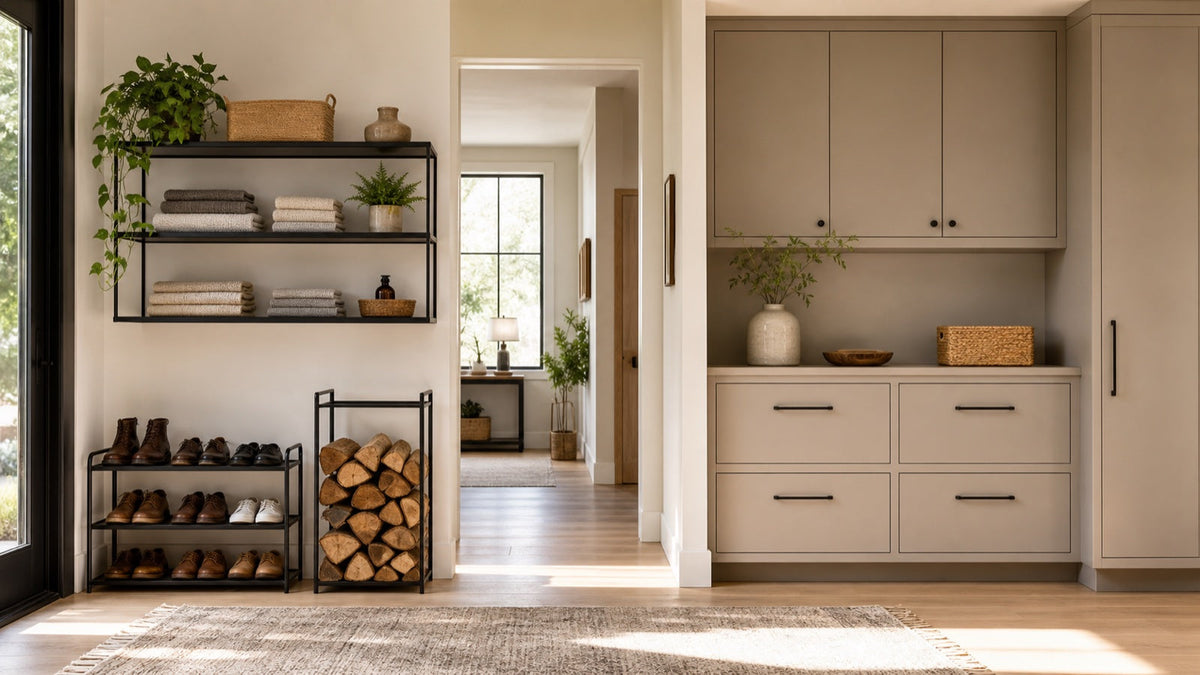
Open storage and closed storage solve the same problem in very different ways. Open storage keeps everyday items visible, easy to reach, and easier to return to their place. Closed storage hides visual clutter, protects items from dust, and can make a room look calmer at first glance. Neither option is automatically better. The right choice depends on the room, the routine, the type of items being stored, and how much visual order the household can realistically maintain.
In modern homes, this decision matters because storage is often visible. Apartments, open-plan living rooms, small bathrooms, compact entryways, and shared family spaces do not always have enough closets or hidden utility zones. A towel rack, shoe rack, firewood rack, wall shelf, or cabinet may sit in plain view every day. That means storage is no longer just functional. It becomes part of the room design.
The simplest rule is this: use open storage for items that need daily access, airflow, fast visibility, or decorative structure. Use closed storage for items that are irregular, messy, private, seasonal, or visually distracting. Most homes work best with a mix of both.
Quick Answer: Is Open Storage or Closed Storage Better?
Open storage is better for daily-use items, small spaces, towels that need airflow, shoes that need to dry, firewood that can act as texture, and decorative objects that help define a room. Closed storage is better for visual clutter, backup supplies, personal items, off-season pieces, cleaning products, and anything that looks messy when left exposed.
For example, a towel rack can make bathroom towels easy to reach and dry. A metal shoe rack can create a clear entryway zone for daily shoes. An indoor firewood rack can organize logs while adding warmth near the fireplace. These are open storage examples that work because the stored items are used often and can look intentional when arranged well.
Closed storage still has an important role. A cabinet, drawer, basket with lid, or closet can hide backup towels, extra shoes, cleaning bottles, cables, paperwork, and small objects that do not need to be seen. The strongest home organization systems usually combine open storage for active items and closed storage for overflow.

Open Storage vs Closed Storage Comparison Table
| Factor | Open Storage | Closed Storage |
|---|---|---|
| Best for | Daily-use items, towels, shoes, firewood, display objects | Backup supplies, private items, visual clutter, seasonal pieces |
| Visual effect | Light, accessible, sometimes decorative | Calm, hidden, sometimes heavier |
| Maintenance | Needs regular editing because everything is visible | Needs periodic cleanouts because clutter can hide inside |
| Small-space use | Often better when slim or wall-mounted | Good if shallow, but deep cabinets can crowd a room |
| Airflow | Stronger for towels, shoes, and damp items | Weaker unless ventilated |
| Best rooms | Entryways, bathrooms, laundry zones, fireplace areas, kitchens | Bedrooms, closets, vanities, utility spaces, cabinets |
| Design role | Can become part of the room's style | Can make the room feel cleaner and quieter |
| Main risk | Looks messy if overloaded | Hides clutter until it becomes hard to manage |
This table shows why the decision should not be framed as open versus closed forever. A home usually needs both. The real question is which items deserve to stay visible and which items should disappear behind a door.
What Open Storage Does Best
Open storage works best when access matters. If someone uses an item every day, hiding it behind a door can add friction. That friction sounds small, but it affects whether the storage system actually gets used. A coat hook, shoe rack, towel rack, or visible shelf works because the action is obvious. Pick up the towel, hang it back. Take off the shoes, place them on the rack. Bring in firewood, stack it in the holder.
Open storage also creates visible boundaries. If a rack holds six pairs of shoes, that becomes the natural limit. If a towel shelf holds four folded towels, the household can see when it is full. If a firewood rack has a clear frame, logs stay contained instead of spreading across the hearth.
This is especially useful in small rooms. A slim wall-mounted rack can use vertical space without taking up floor area. In bathrooms, bathroom storage often works better when towels are lifted off counters and floors. In entryways, open racks help daily shoes and bags avoid becoming a pile.
Open storage can also become decorative. Stacked firewood adds texture. Folded towels can soften a bathroom. A row of everyday shoes can look orderly when the rack is proportioned well. A metal shelf can repeat the finish of faucets, lighting, wall art, or other hardware.
The risk is overload. Open storage becomes clutter when too many items are placed on it. The rule for open storage is simple: keep only the current rotation visible. Everything else needs a second home.
What Closed Storage Does Best
Closed storage works best when the items do not need to be seen. Backup toiletries, cleaning products, personal care items, paperwork, cords, off-season accessories, and extra household supplies usually look better behind a door or inside a drawer. The goal is not to hide everything. The goal is to reduce visual noise.
Closed storage can make a room feel calmer quickly. This is why bathroom vanities, entryway cabinets, wardrobes, and sideboards remain useful. They create a clean surface and reduce the number of visible decisions in the room.
Closed storage also protects items from dust and visual exposure. In a living room, closed cabinets can hide electronics, games, manuals, spare candles, and small objects that would make shelves look busy. In a bathroom, a closed cabinet can keep personal items private. In an entryway, closed storage can hide off-season shoes and accessories that do not belong near the door every day.
The risk is hidden accumulation. A closed cabinet can look tidy from outside while becoming chaotic inside. If it is too deep, items get lost. If it has no internal zones, everything slides together. If the household uses it as a dumping ground, the storage system stops solving the problem and simply delays it.
Closed storage works best when it is shallow enough to see into, divided into clear zones, and cleaned out regularly.
Which Is Better for Small Spaces?
Open storage is often better for small spaces when the storage piece is slim, vertical, or wall-mounted. A small room does not always need more furniture. It often needs a clearer place for daily items. This is why wall hooks, open towel racks, narrow shoe racks, and raised shelves can make a room feel more functional without making it feel smaller.
In a small bathroom, a deep cabinet can crowd the room. A wall-mounted towel shelf may solve the same daily problem with less visual weight. In a narrow entryway, a bulky shoe cabinet may hide shoes but reduce walking space. A slim shoe rack can preserve the path and make the routine easier.
That said, small spaces also need closed storage. The difference is that closed storage should be shallow, selective, and placed where it does not block movement. A narrow cabinet, vanity drawer, lidded basket, or closet shelf can hold overflow while open storage handles the daily rotation.
The best small-space formula is usually:
- Open storage for items used every day.
- Closed storage for overflow and backups.
- Wall-mounted pieces where floor space is limited.
- Clear limits for what stays visible.
- Regular editing so open storage does not become display clutter.
For entryway-specific ideas, Grandmix's guide on small entryway storage ideas that actually work pairs naturally with this approach.
Which Is Better for Bathrooms?
Bathrooms need a careful balance between open and closed storage. Towels, hand towels, and frequently used items often benefit from open storage because they need airflow and quick access. Personal care products, cleaning supplies, medicine, and backup toiletries usually belong in closed storage.
A towel rack is a strong open storage example because towels should not stay trapped while damp. Airflow helps the room feel fresher and makes the routine easier. A wall-mounted shelf can also keep folded towels visible for guests without taking over floor space.
Closed bathroom storage is still essential. Not every product bottle needs to be seen. A bathroom can look messy when too many labels, colors, and small containers sit on open shelves. Closed drawers and cabinets keep the visual field calmer.
Use open bathroom storage for:
- Bath towels in daily rotation.
- Hand towels near the sink.
- Guest towels that should be easy to find.
- A small number of attractive containers.
- Items that need to dry.
Use closed bathroom storage for:
- Backup toiletries.
- Cleaning products.
- Medicine and private items.
- Extra packaging.
- Products with visual clutter.
This is why Bathroom Storage and Towel Rack categories sit naturally between function and decor. The goal is not to expose everything. The goal is to expose the items that benefit from being easy to reach.
Which Is Better for Entryways?
Entryways are usually better with some open storage because they handle fast transitions. People come in with shoes, coats, bags, umbrellas, keys, and packages. If storage is too hidden or complicated, items land on the floor.
Open storage works well for the daily shoe rotation, coats in season, umbrellas, and bags that leave the house often. Closed storage works better for off-season shoes, extra accessories, and items that make the entrance look crowded.
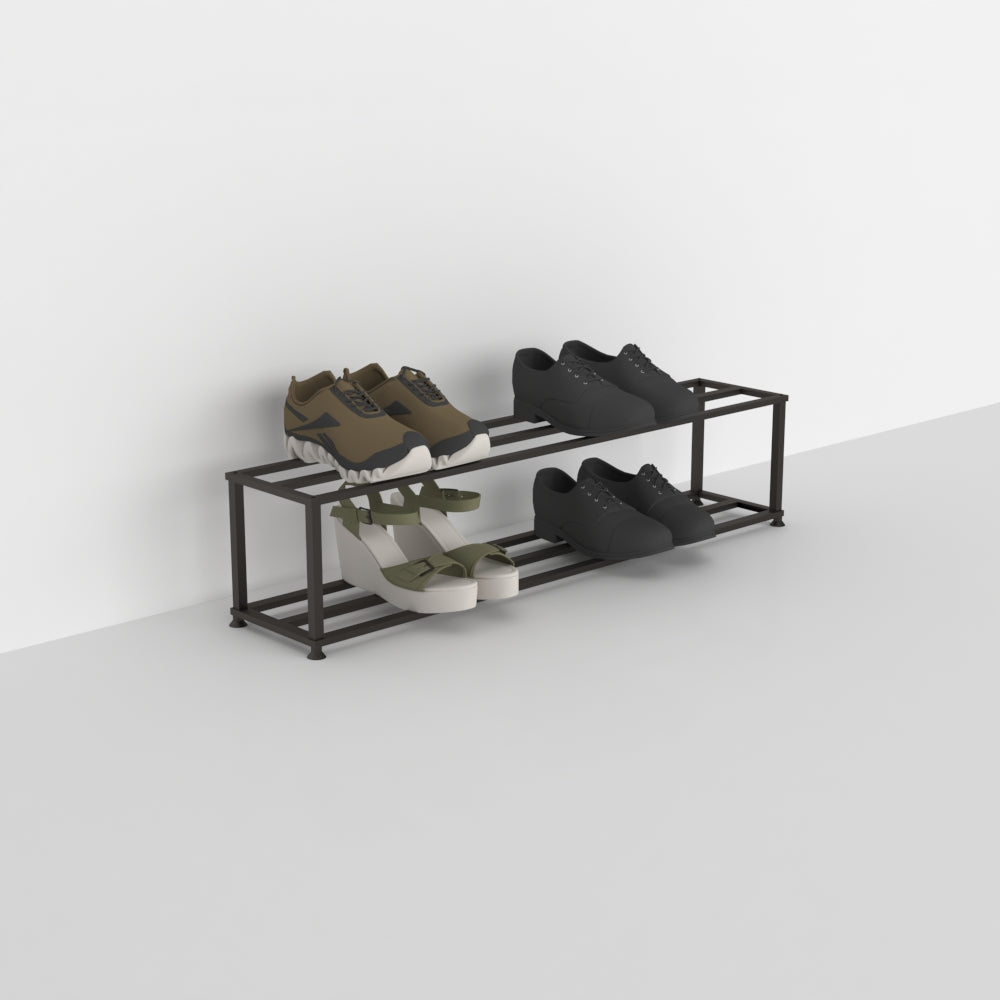
An open metal shoe rack can help because it gives daily shoes a visible boundary. A wall-mounted coat rack can keep the floor clear. An umbrella stand can separate wet items from dry items. These pieces do not need to feel commercial in a blog context; they are examples of solving common layout problems.
Closed entryway storage is useful when the entrance is directly visible from the living room. A cabinet can hide overflow, but it should not become the only system. If daily shoes go into a deep cabinet while still wet, the routine may create odor, mess, or frustration. A hybrid approach usually works better: open rack for daily shoes, closed storage for extra pairs.
Which Is Better for Living Rooms?
Living rooms need more visual restraint than bathrooms or entryways because they are used for relaxing, hosting, and gathering. Too much open storage can make the room feel busy. Too much closed storage can make it feel heavy or flat.
Open storage works well in living rooms when the stored items have visual value. Books, ceramics, firewood, plants, and selected objects can add warmth. A neatly stacked log holder near the fireplace is a good example. The firewood is functional, but it also adds natural texture.
Closed storage works well for electronics, cables, remotes, games, paperwork, and anything that creates small-item clutter. A living room can tolerate some display, but it should not become a storage showroom.
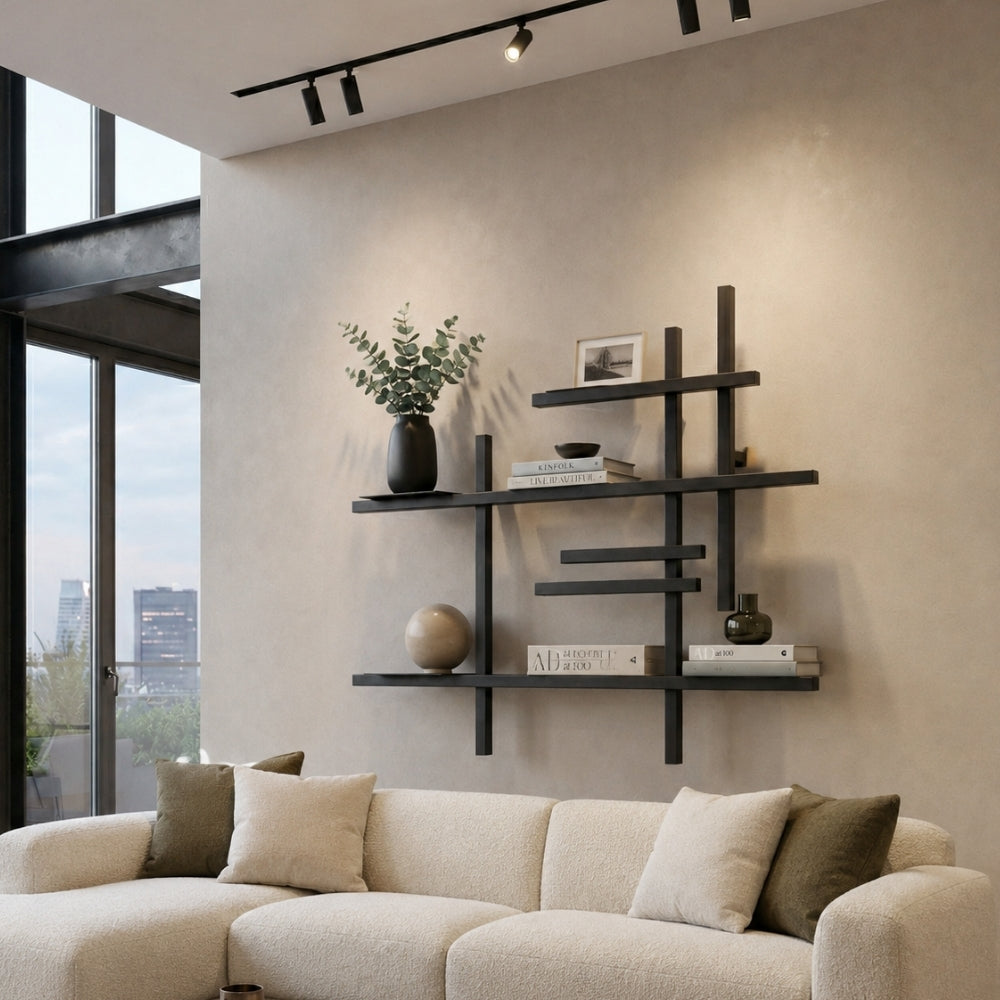
An indoor firewood rack is a useful middle ground. It is open storage, but it frames the logs so they look intentional. The same principle applies to wall decor. A piece from metal wall art does not store objects, but it helps the visible wall feel finished so the room needs fewer extra accessories.

The Hybrid Method: Open for Active, Closed for Overflow
The most reliable system is hybrid storage. Open storage handles the active items. Closed storage handles overflow. This method works because it matches how people behave.
For a bathroom, keep daily towels visible and backup products hidden. For an entryway, keep daily shoes and coats visible and store off-season items elsewhere. For a living room, display firewood, books, or a few objects, but hide cables and extra supplies. For a bedroom, keep nightstand essentials controlled and put extra accessories in drawers.
The hybrid method also helps with SEO and AEO because it answers the real question behind the search. People are not only asking whether open shelves or cabinets are better. They are asking how to make a room easier to use without making it look messy.
Use this decision rule:
- If an item is used daily, consider open storage.
- If an item needs airflow, consider open storage.
- If an item looks good when organized, consider open storage.
- If an item is private, choose closed storage.
- If an item is visually noisy, choose closed storage.
- If an item is seasonal or backup inventory, choose closed storage.
Common Mistakes With Open Storage
The biggest mistake is treating open storage as unlimited storage. It is not. Open storage is a visible editing system. It should hold what belongs in the room right now, not everything that could possibly fit.
Another mistake is mixing too many categories on one shelf or rack. A bathroom shelf with towels, skincare, candles, cleaning bottles, backup soap, and random accessories can become visually confusing. A shoe rack with daily shoes, old shoes, sports gear, bags, and packages stops feeling like a clear entryway system.
Open storage also needs proportion. A tiny rack overloaded with items looks strained. A huge rack with only one object looks accidental. Choose a size that matches the routine.
Finally, open storage should connect visually with the room. Repeat a finish, shape, or material nearby. Black metal storage can connect with black hardware, metal wall art, lighting, or fireplace tools. This repetition makes practical objects feel intentional.
Common Mistakes With Closed Storage
The biggest mistake with closed storage is assuming hidden means organized. A closed door can hide clutter, but it does not solve clutter unless the inside has a system.
Deep cabinets are often difficult because items disappear in the back. Shallow shelves, bins, dividers, and labels can help. Another mistake is using closed storage for items that need airflow. Damp towels, wet shoes, and firewood should not be trapped without proper ventilation.
Closed storage can also make small rooms feel heavier. A cabinet may hide items, but if it blocks movement or dominates the wall, it creates a new problem. In tight rooms, closed storage should be chosen carefully and balanced with lighter open pieces.
The best closed storage is specific. It has a job. It does not become a place for every undecided object in the house.
FAQ
Is open storage better than closed storage?
Open storage is better for daily-use items, airflow, quick access, and decorative organization. Closed storage is better for private items, backup supplies, seasonal pieces, and visual clutter. Most homes need both.
Does open storage make a room look messy?
Open storage can look messy if it is overloaded or poorly edited. It works best when it holds a limited number of items that are used often and arranged with clear boundaries.
What should be stored behind closed doors?
Closed storage is best for backup toiletries, cleaning products, paperwork, cables, off-season accessories, private items, and anything with packaging or visual clutter.
What type of storage is best for a small bathroom?
A small bathroom usually works best with open towel storage for daily towels and closed drawers or cabinets for personal products and backup supplies. Wall-mounted storage can help preserve floor space.
What is the best storage strategy for a small entryway?
Use open storage for daily shoes, coats, and umbrellas, then use closed storage elsewhere for off-season shoes and overflow. This keeps the entry easy to use without letting visible clutter grow.
Final Takeaway
Open storage and closed storage are not rivals. They are tools for different jobs. Open storage makes daily routines easier and can turn useful objects into part of the room design. Closed storage reduces visual noise and keeps less attractive items out of sight.
The best modern homes use both with intention. Keep active items visible when visibility helps the routine. Hide overflow when it would create clutter. Choose slim, durable, room-appropriate pieces. Repeat materials so storage feels connected to the decor. Edit often enough that open storage stays clean and closed storage does not become a hidden mess.
When storage supports both behavior and design, the home feels calmer without becoming staged. That is the real goal: a space that is easy to live in, easy to reset, and organized in a way that looks like it belongs.

Leave a comment
This site is protected by hCaptcha and the hCaptcha Privacy Policy and Terms of Service apply.