


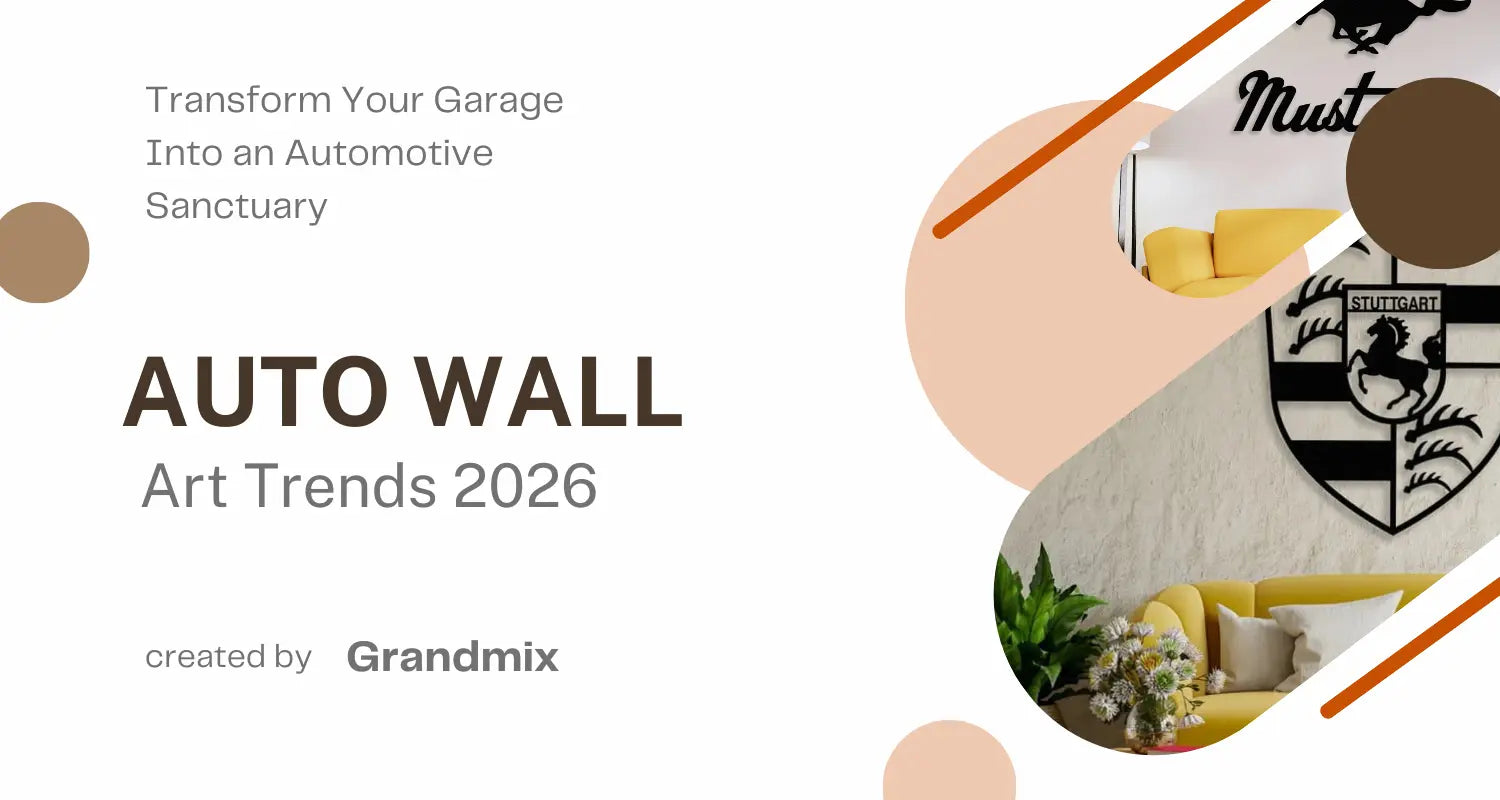
The garage has evolved from a mere storage space into a personal automotive sanctuary where car enthusiasts express their passion through carefully curated auto wall art. In 2026, the fusion of vintage nostalgia and cutting-edge design technology is revolutionizing how we decorate automotive spaces, creating environments that celebrate car culture while enhancing property value and personal satisfaction.
Auto wall art encompasses a diverse range of decorative elements—from vintage gas station signs and racing memorabilia to modern metal sculptures and LED-illuminated pieces—that transform garages, man caves, and even living spaces into automotive-themed galleries. Whether you're a classic car collector, motorsport fanatic, or simply appreciate automotive aesthetics, the right wall decor can elevate your space from functional to phenomenal.
Key Takeaways
- 2026 Design Integration: Modern auto wall art seamlessly blends vintage automotive nostalgia with contemporary smart home technology, including LED lighting and interactive displays
- Material Innovation: Advanced weather-resistant metals and UV-protected finishes ensure garage durability while maintaining aesthetic appeal
- Value Enhancement: Strategic automotive wall decor can increase home resale value by 3-7% when professionally integrated into garage spaces
- Personalization Priority: Custom and personalized auto wall art pieces dominate 2026 trends, allowing enthusiasts to showcase their specific vehicle collection
- Multi-Space Application: Car themed wall art has transcended garage boundaries, becoming increasingly popular in home offices and living rooms
- Sustainable Materials: Eco-conscious collectors are driving demand for recycled metal signs and sustainably sourced automotive artwork
2026 Auto Wall Art Trends: What's Driving the Market
The auto wall art landscape in 2026 is characterized by six dominant trends reshaping how enthusiasts approach garage wall decorations and automotive wall decor more broadly.
1. Hyper-Personalization and Custom Fabrication
The most significant trend dominating 2026 is the shift toward custom car wall art personalized to reflect individual vehicle collections. Advanced laser-cutting technology and affordable 3D printing have democratized custom fabrication, allowing enthusiasts to commission pieces featuring their exact vehicle specifications.

Metal car silhouette designs have emerged as particularly popular personalization options, with precision laser-cut profiles capturing the distinctive lines of specific models—from classic Ford Mustang curves to modern Porsche 911 silhouettes. These minimalist interpretations celebrate automotive design language through clean, dramatic shadow profiles that work equally well in contemporary and traditional garage aesthetics.
Collections like GrandMix Store's metal car silhouettes showcase how powder-coated steel cutouts in various sizes create striking focal points while remaining durable enough for garage environments.
Custom car wall art personalized options now include:
- Silhouette cutouts of your specific vehicle model and year
- Coordinate art marking memorable road trips or race victories
- Family fleet displays showing evolution of household vehicles
- Technical blueprint-style renderings with actual vehicle specifications
2. Sustainable and Reclaimed Materials
Environmental consciousness has permeated the automotive collectibles market, with 2026 seeing surge in demand for auto wall art created from authentic reclaimed materials. Vintage automotive wall art for garage spaces increasingly features genuine license plates, salvaged chrome bumpers, repurposed hood ornaments, and reclaimed wood from historic automotive facilities.
This trend satisfies both environmental values and authenticity demands, with collectors willing to pay premium prices for pieces incorporating genuine automotive memorabilia rather than reproductions.
3. LED Integration and Dynamic Lighting
Automotive wall art with LED lights has evolved from novelty to necessity in 2026 garage design. Modern pieces incorporate color-changing LED systems that can be controlled via smartphone apps, creating different moods for various occasions—bright white for mechanical work, amber nostalgia for evening relaxation, or racing red for entertaining fellow enthusiasts.
The integration extends beyond simple backlighting to include:
- Edge-lit acrylic pieces with etched automotive designs
- Neon-style LED tubing recreating classic signage aesthetics without fragility
- Motion-activated lighting that illuminates as you approach specific displays
- Programmable sequences that can simulate racing lights or engine rhythms
4. Maximalist Gallery Walls
While minimalism dominated interior design for years, 2026 car themed wall art enthusiasts are embracing maximalist gallery walls that tell comprehensive automotive stories. Rather than single statement pieces, collectors are creating curated arrangements featuring dozens of complementary elements that chronicle automotive history, personal journeys, or specific marques.

Racing wall art galleries might combine vintage race programs, driver signatures, track maps, helmet replicas, and action photography to create immersive environments that transport viewers directly to legendary circuits like Monaco or Le Mans.
5. Cross-Genre Integration
The boundaries between auto wall art and other decorative styles are blurring in 2026. Enthusiasts are incorporating automotive elements into:
- Industrial loft aesthetics with exposed mechanical components
- Mid-century modern spaces with period-correct automotive advertising
- Contemporary minimalism through sleek vehicle silhouettes and monochromatic schemes
- Steampunk designs featuring Victorian-era automotive technology
This cross-pollination has made car wall decorations acceptable and even desirable in formal living spaces, expanding the market beyond traditional garage man cave ideas.
6. Heritage and Provenance Documentation
As vintage car posters and authentic automotive memorabilia increase in value, 2026 collectors are prioritizing provenance documentation. Serious enthusiasts now demand certificates of authenticity, historical context, and verifiable sourcing for premium pieces.
This trend has elevated certain categories of automotive wall decor:
- Factory-original dealer promotional materials
- Period-correct race team memorabilia with documented history
- Signed pieces from legendary automotive designers and photographers
- Limited edition releases with numbered certification
| 2026 Trend | Market Adoption | Average Price Premium | Primary Demographic |
|---|---|---|---|
| Custom Personalization | 68% of new purchases | +45% vs. standard | 30-55 age group |
| Sustainable/Reclaimed | 34% of collectors | +30% premium | Millennials, Gen Z |
| LED Integration | 52% of installations | +60% technology cost | Tech-savvy enthusiasts |
| Gallery Walls | 71% of garage renovations | Variable (volume discount) | Serious collectors |
| Cross-Genre Design | 29% expanding beyond garage | Neutral pricing | Design-conscious homeowners |
| Heritage Documentation | 19% of premium purchases | +80% for authenticated | High-value collectors |
Material Selection: Choosing the Right Medium
The material selection for your auto wall art significantly impacts durability, aesthetic appeal, maintenance requirements, and investment value. Understanding the characteristics of different mediums helps ensure your automotive wall decor withstands garage environmental challenges while maintaining visual impact.
Metal: The Garage Standard
Automotive metal signs and metal car wall art dominate garage installations for excellent reasons. Metal provides superior durability in environments with temperature fluctuations, humidity from vehicle cleaning, and potential contact with tools or equipment.
Types of Metal Auto Wall Art:
Powder-Coated Steel: The most popular option for 2026, offering vibrant colors, UV resistance, and rust prevention. Powder coating creates a durable finish that withstands garage conditions better than traditional paint.
Brushed Aluminum: Lightweight and naturally rust-resistant, brushed aluminum provides modern aesthetic appeal with minimal maintenance. Perfect for contemporary vehicle wall hangings and abstract automotive designs.
Laser-Cut Metals: Precision laser cutting allows intricate designs impossible with traditional methods, from detailed vehicle silhouettes to complex motor sports artwork incorporating multiple elements.
Canvas and Print Media
While less durable than metal, canvas prints offer advantages for specific applications. Classic car canvas prints for living room display provide softer aesthetics appropriate for formal spaces while allowing larger format sizes at lower costs than metal equivalents.
2026 Print Technology Advances:
- Giclée printing on museum-quality canvas with 100+ year colorfastness
- UV-protective coatings extending outdoor/garage lifespan
- Textured finishes simulating original artwork techniques
- Gallery wrap options eliminating framing requirements
Canvas works best in climate-controlled garage spaces or interior rooms where environmental factors are less aggressive.

Wood and Mixed Media
Reclaimed wood provides authentic vintage aesthetics, particularly effective for retro gas station wall art signs and rustic automotive themes. Mixed media pieces combining wood backgrounds with metal elements create dimensional interest and tactile appeal.
LED and Acrylic Options
Modern automotive wall art with LED lights consumes 80% less energy than traditional neon, operates cooler, and provides longer service life with minimal maintenance. Acrylic offers unique possibilities for backlit displays and modern interpretations of car enthusiast decor.
| Material | Durability (1-10) | Garage Suitability | Maintenance | Cost Index |
|---|---|---|---|---|
| Powder-Coated Steel | 10 | Excellent | Very Low | Medium-High |
| Brushed Aluminum | 9 | Excellent | Very Low | High |
| Canvas (UV-protected) | 6 | Good (controlled climate) | Low | Low-Medium |
| Reclaimed Wood | 7 | Good (sealed) | Medium | Medium |
| LED Alternative | 8 | Excellent | Low | Medium-High |
| Acrylic/Plexiglass | 7 | Good | Medium | Medium-High |
When choosing materials for your automotive home decor, consider environmental exposure, aesthetic goals, budget allocation, and maintenance commitment. Understanding material characteristics ensures your auto wall art investment provides decades of enjoyment.
Style Categories: Finding Your Automotive Aesthetic
Auto wall art encompasses diverse style categories, each reflecting different aspects of car culture decor and automotive enthusiast identity. Identifying your primary aesthetic preference helps create cohesive spaces that genuinely reflect your automotive passion.
Vintage Americana
This enduringly popular category celebrates automotive golden age aesthetics from the 1930s-1960s. Vintage automotive wall art for garage spaces typically features:
- Route 66 memorabilia and highway nostalgia
- Vintage gas station signage and pump replicas
- Classic diner and drive-in theater imagery
- Period-correct automotive advertising artwork
- Chrome-era details and mid-century typography
Color Palette: Cherry red, cream white, chrome silver, turquoise blue Ideal For: Classic American car collectors, hot rod enthusiasts, nostalgia-focused spaces
Racing and Motorsport Heritage
Racing wall art captures the adrenaline and prestige of competitive motorsport. This category appeals to track day enthusiasts, NASCAR fans, Formula 1 followers, and those inspired by racing legends.
Key Elements:
- Checkered flag motifs and racing stripes
- Team livery reproductions and driver signatures
- Historic race circuit maps and track layouts
- Action photography from legendary competitions
- Helmet and trophy replicas
Iconic Brands Featured: Ferrari Scuderia heritage, Porsche motorsport history, Gulf Racing livery

Modern Luxury and Supercar Culture
Contemporary car themed wall art celebrating cutting-edge automotive engineering and design. This style emphasizes clean lines, sophisticated compositions, and premium materials reflecting the luxury vehicle market.
Characteristics:
- Minimalist vehicle silhouettes and technical drawings
- Black and white or monochromatic photography
- Carbon fiber textures and modern material integration
- Architect-style blueprint presentations
- Limited edition manufacturer-commissioned artwork
Featured Marques: Ferrari, Porsche, Lamborghini, McLaren, Bugatti
Industrial and Mechanical
This style celebrates automotive engineering through exposed components, cross-sections, and mechanical aesthetics. Popular with those who appreciate the technical artistry of vehicle wall hangings that educate as well as decorate.
Display Elements:
- Exploded view diagrams showing component relationships
- Cutaway engine blocks and transmission assemblies
- Patent drawings and engineering schematics
- Actual mechanical components mounted as sculpture
- Speedometer and gauge cluster displays
Muscle Car and American Performance
A distinct subcategory focusing specifically on American muscle car era (1964-1974) and modern performance interpretations. Muscle car artwork celebrates raw power and aggressive styling.
Iconic Vehicles Featured:
- Ford Mustang Boss 429 and Shelby variants
- Chevrolet Corvette and Camaro Z/28
- Dodge Charger and Plymouth Road Runner
- Pontiac GTO and Firebird Trans Am
| Style Category | Popularity 2026 | Investment Range | Space Requirements |
|---|---|---|---|
| Vintage Americana | #1 | $1,200-$4,500 | Medium-Large |
| Racing Motorsport | #2 | $800-$6,000 | Medium |
| Modern Luxury | #3 | $2,000-$8,000 | Small-Medium |
| Industrial Mechanical | #4 | $1,500-$5,500 | Medium-Large |
| Muscle Car Performance | #5 | $900-$3,800 | Medium |
Space Planning and Installation Strategies
Strategic space planning transforms random garage wall decorations into cohesive automotive sanctuaries that enhance both functionality and aesthetic appeal. The most successful auto wall art installations consider vehicle positioning, workflow patterns, lighting conditions, and architectural features.
Garage Zone Analysis
Before installing any automotive wall decor, analyze your garage's functional zones:
Primary Zones:
- Vehicle Display Zone: The hero wall facing your primary vehicle(s), visible when garage doors open. This premium location deserves your most impressive auto wall art pieces.
- Workshop Zone: Areas with tool storage and workbenches. Workshop decoration here should be durable and potentially include technical references alongside aesthetic pieces.
- Storage Zone: Shelving and cabinet areas where decorative elements play supporting roles without overwhelming practical requirements.
- Social Zone: If your garage includes seating areas, this zone benefits from conversation-starting automotive collectibles with interesting backstories.
Scale and Proportion Guidelines
Large car wall art pieces (36"+ width) create bold statements but require proper context.
Scaling Formula for Two-Car Garages (typical 20' x 20'):
- Hero wall centerpiece: 48-72" width
- Supporting pieces: 24-36" width
- Accent elements: 12-24" width
- Gallery wall total coverage: 60-75% of wall surface
Scaling Formula for Single-Car Garages (12' x 20'):
- Hero wall centerpiece: 36-48" width
- Supporting pieces: 18-28" width
- Accent elements: 10-18" width
- Gallery wall total coverage: 50-65% of wall surface
Gallery Wall Layout Strategies
Gallery walls represent the most popular arrangement style for 2026 auto wall art enthusiasts, but successful execution requires planning.
Layout Approaches:
Salon-Style: Organic arrangement with varied sizes and minimal negative space. Creates visual richness ideal for vintage automotive wall art for garage collections mixing different eras.
Grid-Style: Uniform spacing and aligned edges creating modern, organized appearance. Perfect for racing wall art collections with similar sizes and themes.
Central Focus: Large centerpiece surrounded by smaller supporting elements, creating clear visual hierarchy while maintaining comprehensive coverage.
Installation Best Practices
Hardware Selection by Weight:
- Lightweight (Under 10 lbs): Standard picture hangers or adhesive strips
- Medium (10-30 lbs): Toggle bolts or heavy-duty picture hangers
- Heavyweight (30+ lbs): Multiple attachment points, lag screws into studs, or French cleat systems
Installation Process:
- Create full-scale paper templates and tape to wall
- Use 4-6 foot level ensuring horizontal alignment
- Mark mounting holes and install anchors
- Hang pieces with assistant for items over 30" width
- Verify level and security before final tightening
Lighting for Maximum Impact
Proper illumination transforms auto wall art from decorative afterthought to dramatic focal point. The 2026 approach emphasizes lighting as equally important as the artwork itself.

Layered Lighting Fundamentals
Professional automotive wall decor presentation requires multiple lighting layers:
The Four Essential Layers:
- Ambient Lighting: General overhead illumination (50-75 foot-candles)
- Task Lighting: Focused illumination for workbenches (75-100 foot-candles)
- Accent Lighting: Dedicated fixtures highlighting specific pieces (3-5x brighter than ambient)
- Decorative Lighting: Automotive wall art with LED lights as light sources themselves
Accent Lighting Techniques
Track Lighting Systems: Most versatile solution offering adjustable heads, individual dimming control, and easy reconfiguration
Picture Lights: Direct-mount fixtures for individual statement pieces requiring dedicated illumination
LED Strip Backlighting: Creates dramatic halo effects behind metal car wall art and automotive metal signs
Color Temperature Guide
2700K-3000K (Warm White): Creates nostalgic atmosphere ideal for vintage automotive wall art
3500K-4000K (Neutral White): Balanced illumination working with various automotive art styles
5000K-6500K (Cool White): Crisp illumination supporting modern car themed wall art
RGB Color-Changing: Smart LED systems offering programmable colors for special occasions
| Lighting Type | Best For | Cost Range | Energy Efficiency |
|---|---|---|---|
| LED Track Systems | Gallery walls | Excellent | |
| Picture Lights | Statement pieces | $ | Good-Excellent |
| Strip LED (backlighting) | Halo effects | $ | Excellent |
| Smart RGB Systems | Dynamic effects | Excellent |
Budget Planning and Value Considerations
Strategic budget allocation ensures maximum impact from your auto wall art investment across different price points.
Investment Tier Analysis
Starter Collection ($500-$2,000)
Recommended Allocation:
- 1-2 medium-format metal car wall art pieces: $200-$800 (40-50%)
- 3-5 smaller automotive metal signs: $150-$700 (30-35%)
- Basic LED lighting: $75-$400 (15-20%)
- Installation hardware: $25-$200 (5-10%)
Value Strategies: Focus on timeless classics, prioritize garage-suitable materials, DIY installation, build gradually
Enthusiast Collection ($2,000-$7,000)
Recommended Allocation:
- 2-3 statement pieces: $900-$3,500 (45-50%)
- 5-8 supporting elements: $500-$2,100 (25-30%)
- Professional lighting: $300-$1,400 (15-20%)
- Custom pieces: $200-$1,050 (10-15%)
Value Strategies: Mix investment-grade with quality reproductions, develop collection focus, invest in quality lighting
Collector Grade ($7,000-$25,000+)
Recommended Allocation:
- Authenticated vintage originals: $2,450-$11,250 (35-45%)
- Limited edition collaborations: $1,400-$6,250 (20-25%)
- Custom commissions: $1,050-$5,000 (15-20%)
- Professional installation: $700-$3,750 (10-15%)
- Advanced lighting: $700-$3,750 (10-15%)
Cost Optimization Strategies
Timing Purchases: Holiday sales (20-40% discounts), end-of-season clearances, automotive show vendor sales
Source Diversification: Specialty retailers like GrandMix Store, artist direct sales, automotive shows, online marketplaces
Bundle Opportunities: Gallery wall sets (10-25% savings), brand collections, package deals with lighting
| Price Range | Typical Items | Investment Potential |
|---|---|---|
| $25-$100 | Tin signs, small prints | None-Low |
| $100-$300 | Metal signs, canvas prints | Low |
| $300-$800 | Large metal art | Low-Medium |
| $800-$2,000 | Statement pieces | Medium |
| $2,000-$5,000 | Custom/collectibles | Medium-High |
| $5,000+ | Museum pieces | High-Very High |
Building and Maintaining Your Collection
Developing a meaningful auto wall art collection requires strategic curation reflecting your automotive passion while building coherent visual narratives.
Defining Collection Focus
Single Marque Devotion: Focus exclusively on Porsche, Ferrari, Chevrolet Corvette, or other specific manufacturers
Era-Specific Collections: Golden Age (1950s-60s), Muscle Car Era (1964-74), Modern Supercar (1990s-present)
Racing Heritage: Formula 1, NASCAR, endurance racing, rally competition
Thematic Coherence: Chronological narratives, color palette consistency, geographic focus, technical themes
Sourcing and Authentication
Primary Sources:
- Specialty retailers like Grandmix offering quality-assured selections
- Automotive shows with direct artist access
- Manufacturer official merchandise with licensing
Secondary Market:
- Auction houses with authentication services
- Estate sales for vintage discoveries
- Collector communities with shared expertise
Authentication Elements:
- Manufacturer markings and period-correct details
- Material analysis and age-appropriate construction
- Provenance documentation and ownership chain
- Expert verification from marque specialists
Maintenance and Care
Monthly: Dust automotive metal signs, verify mounting security, inspect for damage
Quarterly: Deep clean metal pieces, check lighting function, adjust positioning
Annual: Remove for thorough cleaning, inspect hardware, re-level shifted pieces, update documentation
Material-Specific Care:
- Metal: Mild soap and water, avoid abrasives
- Canvas: Soft brush dusting, no liquid cleaners
- LED: Dust accumulation removal, connection verification
Conclusion: Creating Your 2026 Automotive Sanctuary
The transformation of garage spaces through strategic auto wall art represents more than decoration—it's creating personal automotive sanctuaries celebrating passion and design excellence. As 2026 trends emphasize personalization, technological integration, and authentic expression, opportunities for meaningful automotive spaces have never been greater.
Whether drawn to vintage automotive wall art for garage spaces, racing wall art chronicling motorsport achievement, or contemporary car themed wall art emphasizing modern design, thoughtful curation reflecting genuine enthusiast identity creates spaces transcending simple decoration.
Modern advances in LED technology, sustainable manufacturing, and custom fabrication have democratized access to professional-quality displays. As automotive home decor expands beyond garages into living spaces, cultural acceptance of automotive passion as legitimate design inspiration opens new possibilities for enthusiasts.
Your garage deserves the same design consideration as any room in your home, and the right automotive metal signs, custom pieces, and gallery arrangements transform utilitarian spaces into destinations worthy of the vehicles they house.

Transform Your Space with GrandMix Store
At Grandmix Store, we curate premium metal car wall art and automotive wall decor helping enthusiasts create garage sanctuaries celebrating their passion with museum-quality craftsmanship. From powder-coated steel automotive metal signs to custom-fabricated pieces, our collection combines durability with design excellence.
Explore our metal car silhouette collection and complete catalog at Grandmix Store to begin transforming your automotive space today.
Frequently Asked Questions
Q: What is the best material for auto wall art in an unheated garage?
A: Powder-coated steel or aluminum represents the optimal choice for auto wall art in unheated garages. These materials resist rust, withstand temperature cycling, and maintain color integrity despite environmental challenges. Avoid canvas or unsealed wood in unheated spaces.
Q: How do I hang heavy automotive metal signs safely?
A: For automotive metal signs over 20 pounds, use toggle bolts in hollow walls or lag screws into wall studs. French cleat systems provide excellent weight distribution and allow easy removal. Always exceed minimum weight ratings by 2x for safety.
Q: Can auto wall art increase home resale value?
A: Professionally integrated automotive wall decor can increase garage and home value by 3-7% when executed as part of comprehensive garage upgrades. Buyers appreciate finished, organized garage spaces, particularly in car culture communities.
Q: What size wall art works for a two-car garage?
A: For standard two-car garages (20' x 20'), choose hero wall centerpieces ranging 48-72" width, with supporting pieces between 24-36" width. Ensure total gallery coverage reaches 60-75% of wall surface.
Q: How do I protect wall art from UV damage?
A: UV-filtering window film blocks harmful radiation while maintaining visibility. Position valuable canvas away from direct sunlight, use UV-protective glazing on frames, and implement rotation schedules. Metal tolerates UV exposure better than organic materials.
Q: What lighting color temperature is best?
A: For versatile garage environments, 3500-4000K neutral white provides balanced illumination. Enthusiasts focusing on display might prefer 2700-3000K warm white. RGB color-changing LED systems offer ultimate flexibility.
Q: Are vintage automotive posters good investments?
A: Authenticated vintage automotive collectibles with documented provenance can appreciate significantly. However, modern reproductions offer minimal investment potential. Focus on authenticated pieces from reputable sources if investment matters.
Q: How often should I clean metal automotive wall art?
A: Monthly dusting with microfiber cloths prevents accumulation, while quarterly deep cleaning with mild soap maintains finishes. Annual maintenance should include thorough inspection and protective wax application for bare metal pieces.

Leave a comment
This site is protected by hCaptcha and the hCaptcha Privacy Policy and Terms of Service apply.