


Wall Clock vs Wall Art: Which Is Better for a Blank Wall?
A blank wall can make a room feel unfinished, but the right solution is not always more decoration. Sometimes the wall needs a focal point. Sometimes it needs function. Sometimes it needs scale, rhythm, texture, or a quiet visual pause. That is why the choice between a wall clock and wall art is more interesting than it first appears.
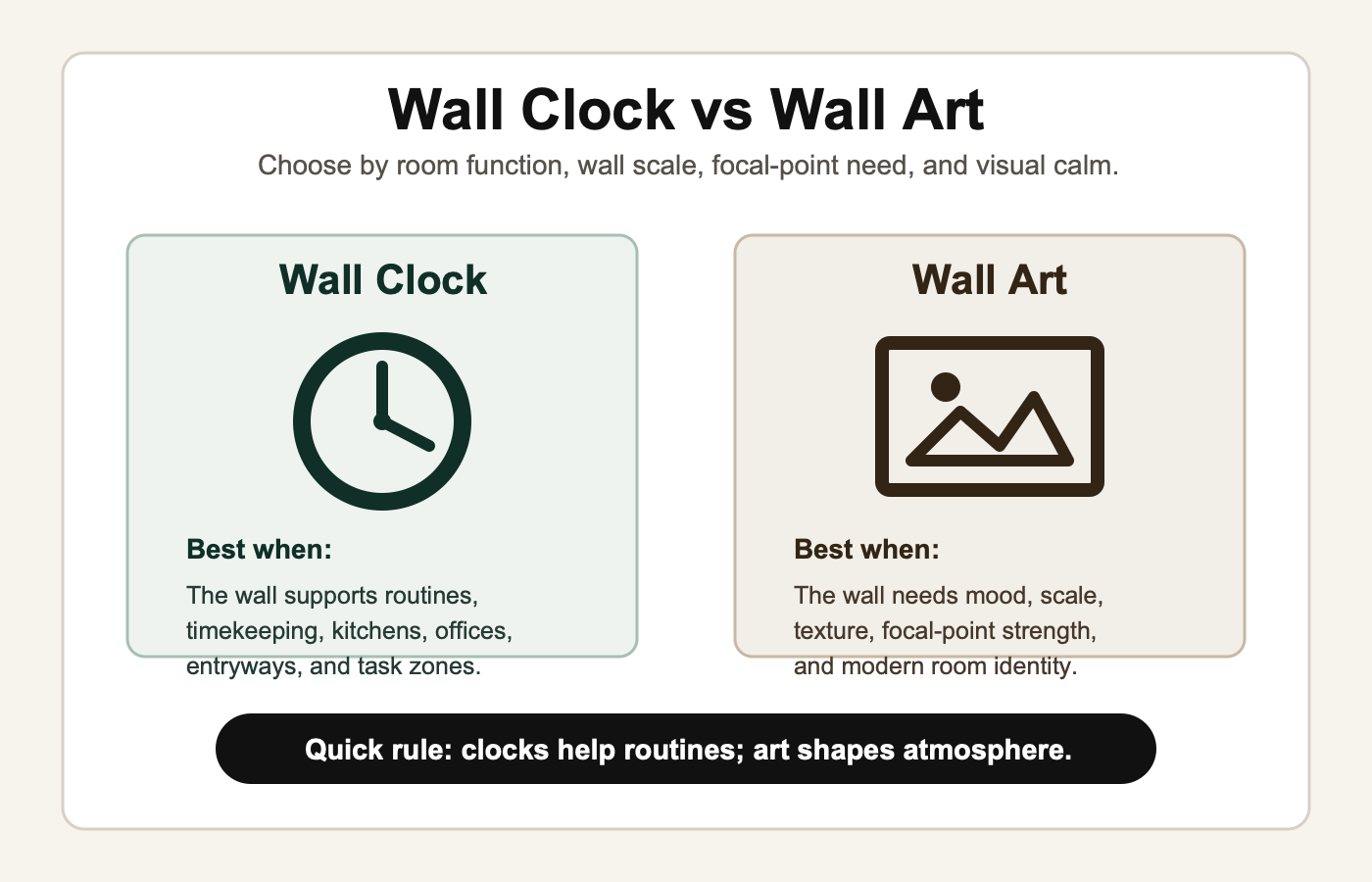
A wall clock adds practical value. It tells time, creates a visual center, and can bring structure to a kitchen, dining room, office, hallway, or entryway. Wall art does a different job. It creates mood, anchors furniture, introduces shape or color, and helps a room express a style. A large metal wall art piece can make a wall feel architectural. A decorative wall clock can make a wall feel useful and designed at the same time.
The simplest rule is this: choose a wall clock when the wall needs function, rhythm, and everyday visibility. Choose wall art when the wall needs emotion, scale, texture, or a stronger design statement. In modern homes, the best answer often depends less on the product category and more on the room's job. A kitchen wall may benefit from a clock because the room is task-oriented. A living room wall above a sofa may benefit from wall art because the room needs a focal point. A hallway may support either, depending on whether it lacks utility or personality.
For Grandmix readers, this comparison connects naturally with the broader wall decor and wall art collection, the metal wall art category, and the wall clock collection. The goal is not to treat one as universally better. The goal is to understand what the wall is asking for.
Quick Answer: Should You Choose a Wall Clock or Wall Art?
Choose a wall clock when the room needs a useful focal point, especially in kitchens, dining areas, offices, entryways, mudrooms, laundry rooms, and busy family spaces. Choose wall art when the room needs a stronger decorative anchor, especially above sofas, beds, consoles, fireplaces, dining benches, or long blank walls that feel empty.
A wall clock is usually better when people naturally check the time in that room. Wall art is usually better when the wall is mostly seen for atmosphere, balance, or visual impact. If the wall is part of a daily routine, a clock can feel natural. If the wall is part of the room's identity, art usually has more range.
The decision should consider room function, sightline, wall size, furniture width, ceiling height, existing decor, and how much visual detail the room already has. A small kitchen may need one clean wall clock instead of several framed prints. A modern living room may need one large art piece instead of a clock that feels too small. A home office may benefit from either: a quiet clock for structure or wall art for calm and inspiration.
Wall Clock vs Wall Art Comparison Table
| Factor | Wall Clock | Wall Art |
|---|---|---|
| Best for | Function, routines, kitchens, offices, dining areas, entryways | Focal points, mood, scale, living rooms, bedrooms, statement walls |
| Main purpose | Tells time and decorates | Sets tone and completes the room |
| Visual effect | Practical, centered, orderly, familiar | Expressive, sculptural, emotional, flexible |
| Best wall type | Medium blank walls, task zones, walls seen during routines | Large blank walls, furniture-backed walls, feature zones |
| Design risk | Can look too small or too utilitarian | Can feel generic if scale or material is weak |
| Maintenance | Easy if surface is simple; moving parts may need battery changes | Usually simple dusting; material care varies |
| Small room fit | Strong when one useful object reduces clutter | Strong when one large piece adds scale without many objects |
| Large room fit | Needs enough diameter and visual weight | Excellent when sized to furniture and wall width |
| Best material direction | Metal, wood, minimalist, industrial, oversized | Metal wall art, canvas, framed art, sculptural decor |
| Quick rule | Use a clock when the wall should help the routine | Use art when the wall should shape the room's mood |
This comparison shows the core difference. A wall clock is not just a smaller decor object with numbers. It changes how the room is used. Wall art is not just empty decoration. It changes how the room feels. Both can solve a blank wall, but they solve different versions of the problem.

What Wall Clocks Do Best
Wall clocks are strongest when a room has a practical rhythm. Kitchens, breakfast nooks, dining rooms, home offices, laundry rooms, entryways, and mudrooms often work better when time is visible. These rooms involve schedules, meals, school mornings, work blocks, chores, arrivals, departures, and transitions. A clock supports those routines without needing to announce itself as a tool.
This is why wall clock decor can feel more natural in task-based rooms than in purely restful rooms. In a kitchen, a clock can sit above a small breakfast table, near open shelving, or on a wall that would otherwise collect random small decor. In a home office, it can help structure the day without requiring another screen. In an entryway, it can support the morning routine and still act as a visual anchor.
A wall clock also creates an easy center. Many blank walls feel awkward because there is no obvious midpoint. A round clock solves that quickly. It gives the eye a shape to land on. It can soften rooms with many straight lines, such as kitchens with cabinets, offices with desks, or entryways with console tables.
Material matters. A metal wall clock can connect with black hardware, light fixtures, table legs, shelf brackets, fireplace tools, or other metal accents. A wood clock can add warmth. A minimalist clock can keep the wall quiet. A large clock can act almost like wall art, especially when the design is sculptural rather than purely functional.
The main risk is scale. A small clock on a large wall can look accidental. It may technically fill the space, but visually it can feel lonely. The clock should relate to the furniture below it, the wall width, and the distance from which people see it. A clock that looks large up close may look small across an open-plan room.
Another risk is style mismatch. A clock with too much lettering, ornate detail, or heavy contrast can fight with the room. If the home is modern, the clock should usually be clean, readable, and material-driven. The best wall clock decor feels like part of the room's language, not a separate object added because the wall was empty.
What Wall Art Does Best

Wall art is strongest when the room needs mood. A living room, bedroom, dining room, hallway, fireplace wall, or console wall often needs more than function. It needs identity. Art can make a room feel calm, bold, warm, architectural, playful, refined, or personal.
This is especially true above furniture. The space above a sofa, bed, sideboard, dining bench, or fireplace usually needs scale. A wall clock may work there if the room is casual or farmhouse-inspired, but in many modern homes, wall art creates a stronger result. The wall becomes part of the composition rather than a place for a useful object.
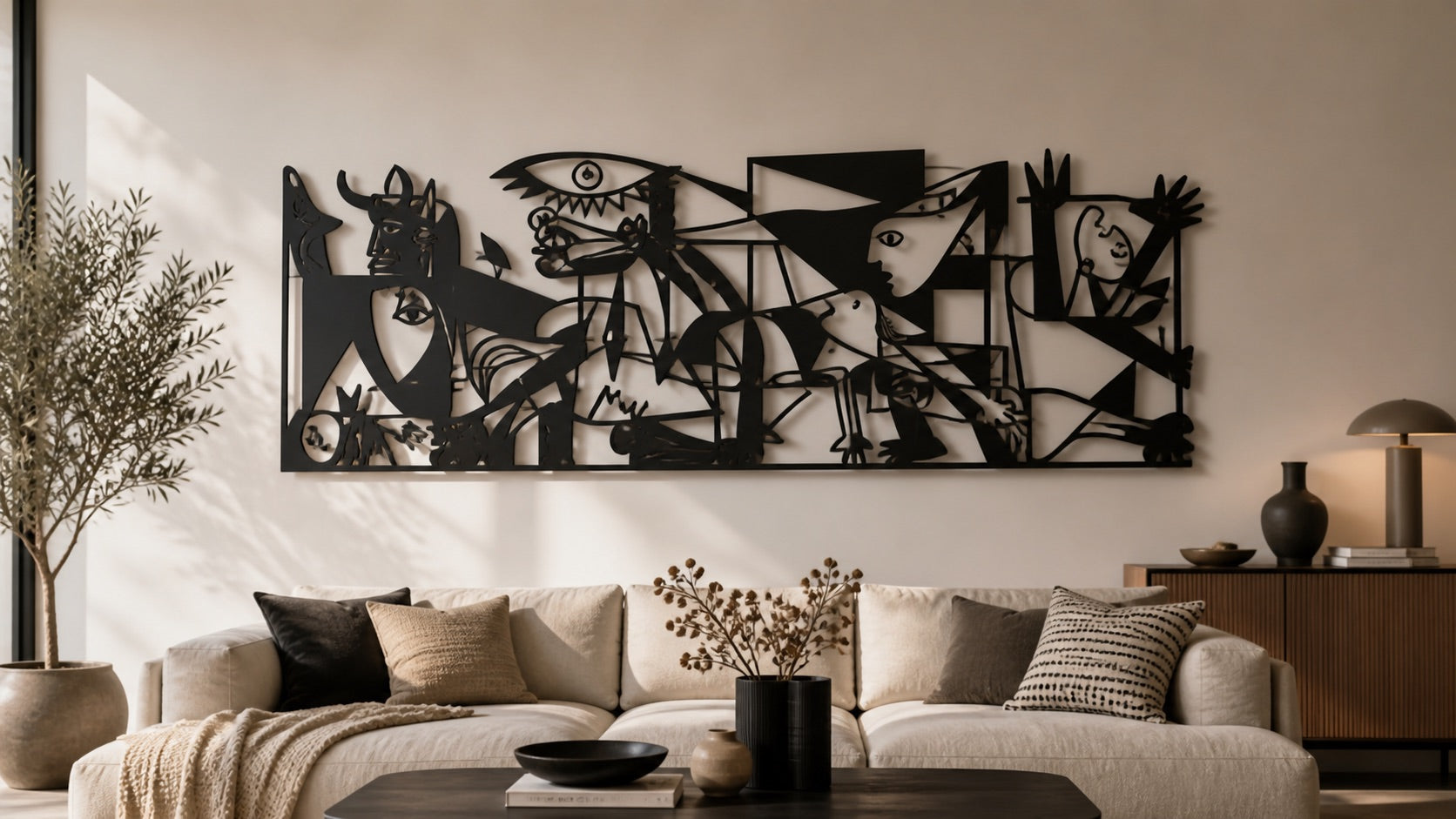
Metal wall art is particularly useful when the room needs structure without heavy color. A dimensional metal piece can introduce line, shadow, and negative space. It lets the wall color remain visible while still giving the space a clear focal point. That makes it a good option for modern interiors where too many framed prints could feel busy.
Wall art also has more emotional range than a clock. It can reference nature, abstract shape, architecture, cultural art, geometry, landscape, movement, or personal taste. A clock can be beautiful, but it is still anchored by function. Wall art has more freedom to set the feeling of the room.
The main risk with wall art is generic selection. A piece chosen only to match colors may not have enough presence. Small art on a large wall can make the room feel unfinished. Overly busy art in a room that already has many objects can add visual noise. This is why Grandmix's guide to large wall art vs gallery wall focuses so much on scale and hierarchy. Wall art works best when it understands the wall's size and job.
Wall art is also a better fit when the room already has plenty of practical elements. A living room may already have a media console, lighting, side tables, storage baskets, books, and textiles. Adding a clock may make the wall feel useful, but adding art may make the whole room feel complete.
Which Looks More Modern?
Wall art usually looks more modern by default because modern interiors often rely on larger forms, fewer objects, and clearer focal points. One strong art piece can create a clean wall without the visual busyness of many small decorations. Metal wall art can feel especially current because it brings dimension while staying restrained.
That does not mean wall clocks are outdated. Modern wall clocks can look excellent when they are simple, oversized, sculptural, or material-driven. A black metal wall clock in a kitchen, office, dining nook, or entry can look very current if it connects with the room's hardware and lines. The problem is usually not the clock itself. The problem is using a clock in a room where the wall needs atmosphere rather than function.
A useful test is to ask what the wall should communicate first. If the answer is "this room is organized and useful," a clock can be modern. If the answer is "this room has a mood and point of view," wall art is usually stronger.
Modern rooms also need visual quiet. If the clock has large numbers, heavy typography, or decorative phrases, it may feel less modern. If the wall art is too small, too colorful, or too generic, it may also feel less modern. Both categories can succeed or fail depending on restraint.
For a clean modern home, choose one dominant wall object in each zone. A large wall clock can lead in the kitchen. A metal wall art piece can lead in the living room. A smaller framed print can support a hallway. The mistake is making every wall compete for attention.
Which Is Better for Living Rooms?
Living rooms usually benefit from wall art because they need a focal point that supports comfort, conversation, and style. The main living room wall is often viewed from the entry, kitchen, dining area, and seating zone. A single strong artwork can organize that view.
Above a sofa, wall art is usually better than a clock. The sofa creates a horizontal base, and the wall above it often needs width, proportion, and visual balance. A clock can look too centered and small unless it is oversized and intentionally styled. A large metal wall art piece, canvas, or sculptural wall decor can relate more naturally to the furniture below.
Above a fireplace, the answer depends on the fireplace style. A clock can work if the fireplace wall is traditional, rustic, or casual. Wall art usually works better if the room is modern, minimal, or design-focused. A metal art piece can echo fireplace tools, black trim, lighting, or architectural lines.
On a side wall or reading corner, either option can work. A clock may be useful if the living room doubles as a family command center. Wall art may be better if the corner needs softness, color, or a quieter point of interest.
The best living room approach is often hierarchy. Use wall art on the main focal wall. Use a clock in a secondary zone where it helps the routine. This prevents the room from feeling like every wall is trying to be the center.
Which Is Better for Kitchens and Dining Areas?
Kitchens and dining areas are natural places for wall clocks. These rooms involve timing: cooking, school mornings, meals, coffee routines, cleaning, and leaving the house. A clock is useful without feeling forced. It also gives a blank kitchen wall a purpose.
In a kitchen, a wall clock works well on a wall near a breakfast table, beside pantry storage, above a small shelf, or in a visible spot away from steam and splashes. It should be readable from the places where people actually stand. If it is purely decorative but hard to read, it loses the advantage that made it useful.
Dining rooms are more flexible. A casual dining area can use a wall clock as a warm, practical focal point. A formal dining room may benefit more from wall art because the room's purpose is atmosphere rather than timing. A large art piece can set the tone for dinner, while a clock may make the room feel more utilitarian.
In open-plan homes, be careful with repetition. If the kitchen already has a clock, the nearby dining wall may not need another timepiece. It may need art to balance the functional kitchen zone. If the dining area is small and busy, one clean clock may be better than a group of framed prints.
The main question is whether the wall is part of a task zone or a mood zone. Kitchen walls are often task zones. Dining walls can be either. Let that distinction guide the decision.
Which Is Better for Home Offices?
Home offices are one of the few rooms where both choices can be equally strong. A wall clock can support focus, time blocking, meetings, and work routines. Wall art can support calm, creativity, and visual identity. The better choice depends on how the office is used.
If the office is used for scheduled calls, task management, client work, or schoolwork, a clock can be useful. It keeps time visible without requiring the user to check a phone. That matters because phones invite distraction. A wall clock can be a quiet productivity tool.
If the office is used for creative work, reading, writing, design, or long focus sessions, wall art may be better. A strong artwork can make the room feel less temporary and more intentional. It can also improve video-call backgrounds without adding clutter.
A hybrid approach works well in offices. Use one clock where it can be seen from the desk, and use wall art behind or beside the desk to shape the room's mood. The key is not to overload the wall. An office already has screens, papers, shelves, books, and equipment. The wall should bring order, not more noise.
For modern offices, metal wall art can be a strong alternative to printed posters because it adds dimension and structure. Grandmix's guide to metal wall art vs canvas prints is useful here because office walls often need durability, depth, and a more mature visual texture.
Which Is Better for Entryways and Hallways?
Entryways are practical transition zones, so wall clocks can make sense. They support leaving on time, checking the schedule, and giving the wall a purpose. A clock near the door can also pair with hooks, shoe storage, umbrella stands, or a console table.
However, entryways also create the first impression of the home. If the entry already has a lot of practical storage, wall art may be better because it adds personality. A metal wall art piece above a console can make the entry feel designed rather than purely functional.
Hallways are different. A long hallway is usually not a place where people stop to check time. It is a place where the eye moves. Wall art, small framed collections, or sculptural pieces often work better because they create rhythm along the path. A clock at the end of a hallway can work as a destination, but several clocks or one small clock on a long wall can feel misplaced.
If the entryway is tiny, choose the object that solves the biggest problem. If the problem is daily routine, choose a wall clock. If the problem is that the entry feels plain or unfinished, choose wall art. If the entry already has open storage, hooks, shoes, and bags, wall art may create better balance than another functional object.
Which Is Better for Bedrooms?
Bedrooms usually need calm, so wall art is often better than a wall clock. A bedroom should not always remind people of time. A large clock above the bed can feel visually strong, but it can also make the room feel task-oriented instead of restful.
Wall art above a bed can anchor the room without adding pressure. A soft abstract piece, a minimal metal artwork, a landscape-inspired design, or a quiet sculptural form can make the wall feel complete. The art should be sized to the bed and headboard, not chosen as a small accent floating alone.
A clock can still work in a bedroom if it is subtle and placed away from the bed's main focal wall. It may fit near a dresser, reading chair, or small desk area. But if the goal is a restful modern bedroom, wall art usually creates a better atmosphere.
This is another case where function should not automatically win. Phones, alarm clocks, and smart devices already provide time. The wall may be more valuable as a calm design surface. If the bedroom feels visually unfinished, art is usually the better blank-wall solution.
Which Is Better for Small Rooms?

Small rooms need careful wall choices because every object feels louder. A wall clock can be excellent in a small room if it replaces several smaller decorations. One useful object can make the wall feel complete without clutter. This works in small kitchens, compact offices, laundry rooms, mudrooms, and entryways.
Wall art can also work in small rooms, especially when it is one confident piece instead of many small items. A common mistake is using tiny art because the room is tiny. That often makes the space feel fragmented. One larger piece with breathing room can make the room feel more intentional.
The deciding factor is visual activity. If the room already has open shelves, appliances, hooks, baskets, towels, or visible storage, choose one simple focal point. That could be a clean clock or a restrained art piece. If the room is plain and lacks personality, wall art may add more value.
For very small rooms, avoid using both a large clock and large art on the same wall. They will compete. Let one object lead. If the room needs timekeeping, choose a clock with strong scale. If the room needs mood, choose art and keep the clock elsewhere.
Which Is Easier to Maintain?
Wall clocks are easy to maintain when the design is simple. Most need occasional dusting and battery changes. If the clock has exposed moving parts, deep grooves, or delicate hands, it may need more careful cleaning. In kitchens, clocks can collect grease or dust if placed too close to cooking areas.
Wall art maintenance depends on material. Metal wall art is usually easy to dust or lightly wipe. Canvas needs gentler care. Framed prints may require glass cleaning. Gallery walls require more dusting and straightening because there are many separate pieces.
For low-maintenance homes, one large wall object is usually better than many small ones. Whether that object is a clock or wall art depends on the room. A single wall clock in a kitchen can be easy. A single metal art piece in a living room can also be easy. The harder version is a crowded wall with many frames, small shelves, objects, and decorative extras.
Maintenance also includes mental maintenance. A wall clock has a clear purpose, so people rarely second-guess it. Wall art can invite more style decisions over time. That is not bad, but it means the choice should feel durable enough to live with.
Common Mistakes With Wall Clocks
The biggest wall clock mistake is choosing a clock that is too small. A clock may be readable up close but visually weak from across the room. If it sits above a sofa, console, dining bench, or large kitchen wall, it needs enough diameter and visual weight to belong.
Another mistake is placing a clock where nobody needs time. A clock in a hallway, formal living room, or above a bed can work, but only if it supports the room's design. If the wall mainly needs mood, art may be better.
A third mistake is ignoring the clock's typography. Large numbers, decorative phrases, and ornate hands can dominate the wall. In modern interiors, simpler clocks usually age better. The shape, material, and proportion should do the design work.
Finally, avoid using a clock as a substitute for scale. If the wall is very large, one medium clock may not be enough. It may need an oversized clock, a clock paired with subtle surrounding elements, or wall art instead.
Common Mistakes With Wall Art
The biggest wall art mistake is choosing something that is too small for the wall. Small art above wide furniture can make a room feel unfinished. The artwork should relate to the furniture below it and the wall around it.
Another mistake is choosing art only by color. Matching the sofa or rug is not enough. The piece should also have the right scale, material, shape, and emotional tone. A room can match perfectly and still feel flat.
A third mistake is using too much art in a room that already has many visible objects. If there are open shelves, patterned textiles, plants, books, and decorative storage, the wall may need one quiet piece rather than a busy arrangement.
Finally, avoid placing art where a functional object would solve the room better. A kitchen command wall, office wall, or entry wall may need a clock more than another print. The best interiors balance beauty and function.
The Hybrid Method: Let One Wall Be Useful and Another Be Expressive
Many homes do not need to choose one category everywhere. The strongest approach is often hybrid. Use a wall clock in the room where time matters most, and use wall art in the room where atmosphere matters most.
For example, a kitchen can use a clean wall clock while the living room uses a large metal wall art piece. An office can use a clock beside the desk and wall art behind the desk. An entryway can use a small clock near the door and a metal art piece above a console. A dining room can use art on the main wall and a clock in the nearby kitchen zone.
This method creates hierarchy. Every wall does not need to do the same job. Some walls help routines. Some walls create mood. Some walls stay quiet. When each wall has a job, the home feels designed rather than filled.
FAQ
Is a wall clock better than wall art?
A wall clock is better when the room needs visible timekeeping and a useful focal point. Wall art is better when the wall needs mood, scale, texture, or a stronger decorative statement.
Are wall clocks outdated?
Wall clocks are not outdated, but overly ornate or undersized clocks can feel dated. Modern wall clocks work best when they are clean, readable, well-scaled, and connected to the room's materials.
Should I put a clock above a sofa?
A clock can work above a sofa if it is large enough and matches the room, but wall art is usually stronger above a sofa because the space needs width, scale, and visual atmosphere.
Where should a wall clock go?
A wall clock works best in kitchens, dining nooks, offices, entryways, laundry rooms, mudrooms, and other rooms where people naturally check time during routines.
What is better for a bedroom, a clock or wall art?
Wall art is usually better for a bedroom because bedrooms need calm. A clock can work near a dresser or desk, but above the bed, art usually creates a more restful focal point.
Can you mix wall clocks and wall art?
Yes. Use a wall clock in a practical zone and wall art in a mood-setting zone. Avoid placing too many strong wall objects close together unless one clearly supports the other.
Final Takeaway
Wall clocks and wall art both solve blank-wall problems, but they solve different problems. A wall clock adds function, routine, and structure. Wall art adds mood, scale, identity, and visual depth.
Choose a wall clock when the wall should help the day run more smoothly. Choose wall art when the wall should make the room feel finished. In many modern homes, the best solution is not either-or. It is using each where it naturally belongs: clocks in routine zones, art in focal zones, and quiet walls wherever the room needs breathing room.
For Grandmix-style interiors, start with the wall's job. If the wall needs function, compare the wall clock collection. If it needs a focal point, explore wall decor and wall art or metal wall art. The strongest choice is the one that makes the room easier to understand.

Leave a comment
This site is protected by hCaptcha and the hCaptcha Privacy Policy and Terms of Service apply.